New Finds


I like the recipes in Real Simple magazine because 1. They are real simple, and 2. They combine ingredients in imaginative ways. I would never think to make a salad of oranges, endive, chopped almonds and chives, but it was delicious. Topped with simply prepared artic char and served with couscous on the side, this is a quick, easy and tasty supper.

Avoiding Additives and Preservatives

Use a wine vinegar without sulfites added, and check the label on the almonds to make sure they have no preservatives added.
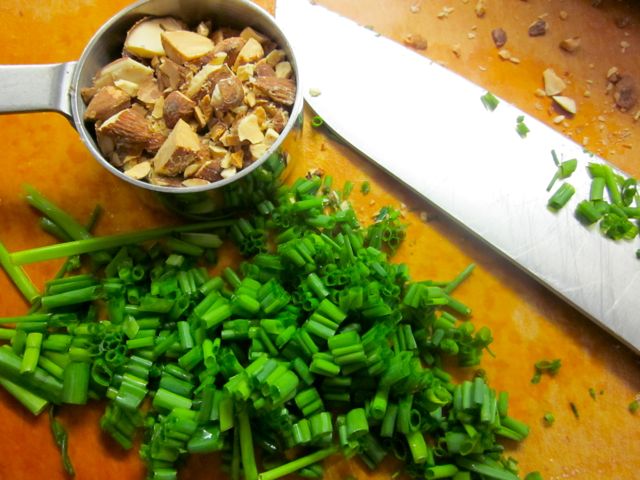
Chop almonds and chive for the salad

Separate the endive heads into individual leaves

The recipe calls for Arctic char, but almost any fish would work

Mix the salad ingredients together
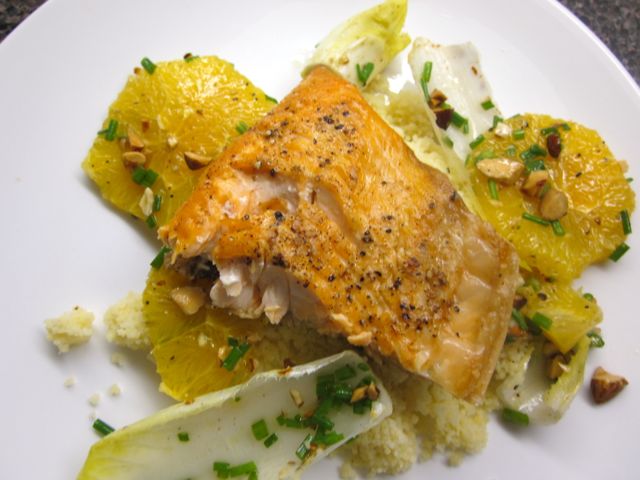
Arctic char with couscous and citrus salad

Ingredients:

1 cup (250 ml) couscous

4 clementines or 2 small oranges, peeled and sliced into rounds

2 tablespoons (30 ml) sherry vinegar or white wine vinegar

¼ cup (60 ml) olive oil

kosher salt and black pepper

1 head endive, leaves separated

¼ cup (60 ml) chopped roasted almonds

2 tablespoons (30 ml) chopped fresh chives

4 6-ounce (170 g) pieces boneless, skinless arctic char or salmon

Preparation:

Cook the couscous according to the package directions.

Combine the clementines, vinegar, 3 tablespoons (45 ml) of the oil, and ¼ (1 ml) teaspoon each salt and pepper in a medium bowl. Add the endive, almonds, and chives and toss to combine.

Heat the remaining tablespoon of oil in a large nonstick skillet over medium-high heat.

Season the fish with ½ teaspoon (2 ml) salt and ¼ teaspoon (1 ml) pepper. Cook until opaque throughout, 3 to 4 minutes per side.

Serve the couscous topped with the citrus salad and fish, drizzled with any remaining dressing. Serves 4.

From the April 2014 issue of Real Simple

This recipe from the May 14 issue of Canadian Living would be great for a casual spring dinner party. Pork tenderloin and asparagus are roasted, served over rice, topped with a warm sauce of ginger, garlic, chicken broth, orange juice and mustard, and garnished with almonds and parsley. It’s healthy, tasty and looks nice too. One note: if your asparagus is thin, it may be done before the pork is cooked. Either remove it and keep it warm, or add it to the pork after it is partially cooked.

Avoiding Additives and Preservatives

Check the label on the almonds to make sure no preservatives have been added. Use fresh lemon juice and orange juice and an all-natural chicken stock, such as Imagine brand. Many Dijon mustards contain sulfites; I use President’s Choice Old-Fashioned Dijon, which is additive free.

Roast the pork and asparagus

Prepare the almond parsley garnish

Reduce the warm citrus sauce

Pork tenderloin with asparagus and warm citrus sauce

Ingredients:

¼ cup (60 ml) natural almonds, chopped

2 tbsp (30 ml) chopped fresh parsley

2 tsp (10 ml) lemon juice

400 g pork tenderloin, trimmed if necessary

¼ tsp (1 ml) each salt and pepper

1 tbsp (15 ml) olive oil

2 bunches (each 450 g) asparagus, trimmed

1 tbsp (15 ml) grated fresh ginger

2 cloves garlic, minced

¾ cup (175 ml) sodium-reduced chicken broth

½ cup (125 ml) orange juice

1 tsp (5 ml) Dijon mustard

½ tsp (2 ml) grated orange zest

¾ cup (175 ml) basmati rice

Preparation:

Stir together almonds, parsley and lemon juice; set aside.

Sprinkle pork with half each of the salt and pepper. In nonstick skillet, heat half of the oil over medium-high heat; brown pork all over, about 6 minutes. Transfer pork and asparagus to foil-lined rimmed baking sheet. Sprinkle asparagus with remaining salt and pepper. Bake in 400 F (200 C) oven until just a hint of pink remains inside pork or instant-read thermometer inserted into thickest part reads 160 F (71 C), about 15 minutes. Transfer pork to cutting board; tent with foil. Let rest for 5 minutes before slicing.

Add remaining oil to skillet; heat over medium heat. Cook ginger and garlic, stirring, for 2 minutes. Stir in broth and orange juice; bring to boil. Stirring often, reduce sauce to ½ cup, 5 to 7 minutes.

Stir in mustard and orange zest. Cook rice according to package directions; serve with pork, asparagus and sauce. Sprinkle with almond mixture. Serves 4.

From the May 2014 issue of Canadian Living

Insalata Caprese is one of my favourite dishes, so when I saw this recipe in an ad for chicken I thought I’d try it. It’s very simple—mix oil, salt, pepper, garlic, lemon juice and lemon zest in a baking dish, add thin chicken breasts, top with stock, tomato, cheese slices and basil and bake. It looks great, tastes great and is ready in 30 minutes.

Avoiding Additives and Preservatives

Use fresh lemon juice and a stock with all-natural ingredients, such as Imagine brand. The fresh mozzarella, also known as bocconcini, should have no colour or preservatives. I use Tre Stella brand.

Place tomato slices and cheese on top of chicken before baking

I served the Caprese Chicken with noodles and broccolini

Ingredients:

1 tbsp (15 ml) olive oil

¼ tsp (1 ml) salt

¼ tsp (1 ml) ground black pepper

1 large clove garlic, minced

Zest of 1 lemon, divided

1 tsp (5 ml) fresh lemon juice

1 lb. (454 g) skinless boneless chicken breasts, pounded thinly

¼ cup (60 ml) chicken stock or water

5 large tomato slices

4 medium balls of fresh mozzarella cheese, each sliced into 3 pieces

5 fresh basil leaves, chopped

Preparation:

Preheat oven to 375 degrees F (190 degrees C). Mix together oil, salt, pepper, garlic, lemon juice and ½ the lemon zest in a 9 x 13 inch (3.5 L) ovenproof baking dish. Add chicken, turning to coat, and allow to stand for 5 to 10 minutes.

Pour stock over chicken and top with tomato, cheese slices and basil.

Bake for 15-20 minutes or until chicken reaches internal temperature of 170 degrees F (77 degrees C). Sprinkle with remaining lemon zest before serving. Serves 3-4.

From mapleleafprime.ca

This delicious baked pasta from the April 2014 issue of Food and Wine features a sauce made of roasted tomatoes, garlic, thyme and basil. The roasted tomatoes are added to sautéed onion, crispy pancetta and olives. Meanwhile, roast some broccoli. Cook the rigatoni and stir into the sauce, along with the broccoli, ricotta, Parmigiano-Reggiano and more fresh basil. This would be a great dish for Sunday brunch or a weeknight supper.

Avoiding Additives and Preservatives

Use butter with only a single ingredient: cream. I used nitrite-free bacon instead of pancetta and President’s Choice garlic-stuffed olives, which are all-natural. Check the labels on the ricotta and Parmigiano-Reggiano to make sure they don’t contain colour or artificial ingredients.

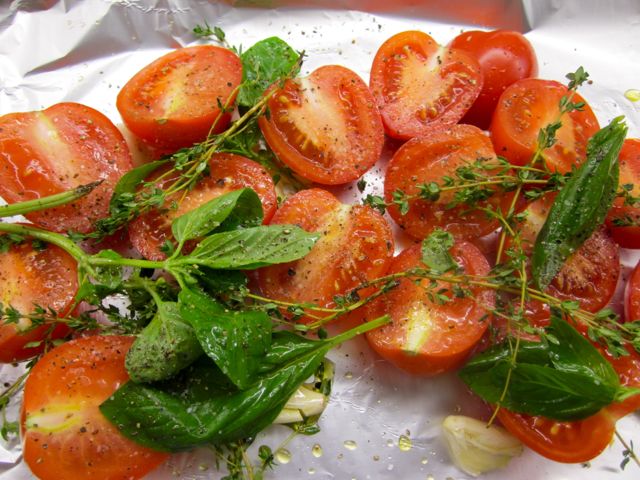
Place fresh herbs on tomatoes prior to roasting

Roast the broccoli

The roasted tomatoes form the basis of the sauce

Combine sauce, broccoli and ricotta

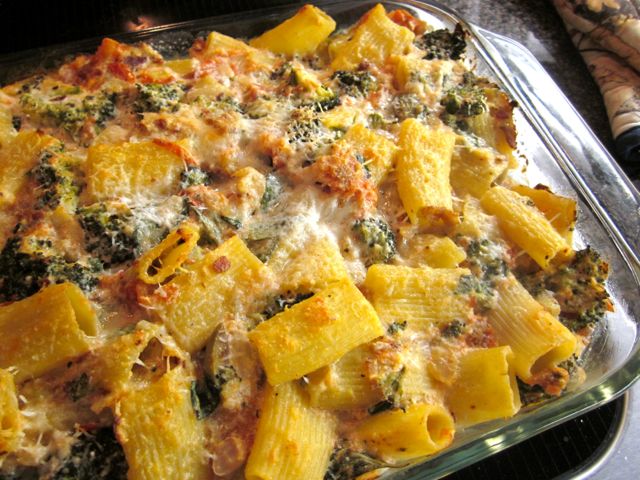
Place in baking dish and sprinkle with Parmigiano

Baked rigatoni with broccoli, green olives and pancetta

Ingredients:

2 tablespoons (30 ml) unsalted butter, plus more for greasing

1 ½ pounds (680 g) plum tomatoes, halved lengthwise

3 garlic cloves, crushed

2 thyme sprigs

½ cup (125 ml) torn basil leaves, plus 1 basil sprig

3 tablespoons (45 ml) extra-virgin olive oil

Kosher salt

Freshly ground black pepper

1 ½ pounds (680 g) broccoli, cut into small florets and stems reserved for another use

One 4-ounce (113 g) slice of pancetta, finely diced

1 large onion, very finely chopped

1 cup (250 ml) pitted green olives, such as Castelvetrano, halved

1 pound (454 g) rigatoni

2 cups (500 ml) fresh ricotta cheese

¾ cup (175 ml) freshly grated Parmigiano-Reggiano cheese

Preparation:

Preheat the oven to 425° F (232° C) and butter a 9-by-13-inch (23-by-33 cm) ceramic or glass baking dish. On a rimmed baking sheet, toss the tomatoes, garlic, thyme and basil sprigs with 1 tablespoon (15 ml) of the olive oil and season with salt and pepper. Roast for about 20 minutes, until softened and browned in spots; let cool. Discard the thyme and basil sprigs and coarsely chop the tomatoes and garlic, reserving any juices.

Meanwhile, on another rimmed baking sheet, toss the broccoli florets with 1 tablespoon (15 ml) of the olive oil and season with salt and pepper. Roast for 15 minutes, or until crisp-tender. Leave the oven on.

Meanwhile, in a large, deep skillet, heat the remaining 1 tablespoon (15 ml) of olive oil. Add the pancetta and cook over moderately high heat, stirring occasionally, until browned and nearly crisp, about 5 minutes. Add the onion and cook, stirring occasionally, until softened, about 5 minutes. Stir in the olives, tomatoes and garlic and the 2 tablespoons (30 ml) of butter; keep warm.

In a pot of salted boiling water, cook the rigatoni until al dente. Drain, reserving 1¼ (300 ml) cups of the cooking water. Stir the pasta into the skillet along with the reserved cooking water, broccoli, ricotta, torn basil and ½ (125 ml) cup of the Parmigiano. Season with salt and pepper. Transfer the pasta to the prepared baking dish. Sprinkle the remaining ¼ cup (60 ml) of Parmigiano on top and bake for 15 minutes, until bubbling and browned on top. Let stand for 5 minutes before serving. Serves 6.

From the April 2014 issue of Food and Wine

This delicious side dish from the April 2014 issue of Canadian Living takes only minutes to prepare and would be perfect for a spring dinner party or Easter feast. Crisp some bacon or pancetta, sauté the veggies, add a little vinegar at the end and it’s ready!

Avoiding Additives and Preservatives

I used nitrite-free bacon instead of pancetta. Look for a red wine vinegar with no sulfites added. I use Eden Organic brand.

This side dish cooks in about 8 minutes

Asparagus and mushroom sauté with pancetta

Ingredients:

1 pkg (150 g) diced pancetta

3 shallots, sliced

3 bunches (each 450 g) asparagus, trimmed and cut in 2-1/2-inch (6 cm) pieces

2 pkg (each 227 g) cremini mushrooms, quartered

½ tsp (2 mL) pepper

Pinch salt

2 tbsp (30 mL) red wine vinegar

Preparation:

In large nonstick skillet over medium high heat, cook pancetta, stirring occasionally, until crisp, about 5 minutes.

Add shallots, asparagus, mushrooms, pepper and salt; cook, stirring occasionally, until asparagus is tender-crisp, about 8 minutes. Stir in vinegar. Serves 8-10.

From the April 2014 issue of Canadian Living

This very healthy recipe from the March 2014 issue of Bon Appetit uses one of my favourite methods for cooking fish—slow-roasting in the oven. At a low temperature, the fish cooks to perfection in about 30 minutes. This all-in-one dish meal also includes chickpeas and wilted greens. The recipe called for mustard greens, but I used kale instead.

Avoiding Additives and Preservatives

The ingredients to check for additives and preservatives are the chickpeas, cumin, honey, Dijon and capers. I use PC Blue Menu canned chickpeas, PC Old-Fashioned Dijon and Unico capers. Use an all-natural honey and make sure the cumin does not contain colour or anti-caking agents.

Mash some of the chickpeas

Place sauteed kale on top

Place salmon on top

Slow-cooked salmon, chickpeas and greens

Ingredients:

Salmon

2 tablespoons (30 ml) olive oil, plus more

1 15.5-oz. can (439 g) chickpeas, rinsed

½ teaspoon (5 ml) ground cumin

Kosher salt and freshly ground black pepper

1 garlic clove, thinly sliced

1 bunch small mustard greens, ribs and stems removed, leaves coarsely chopped

1 teaspoon (10 ml) honey

4 6-oz. (170 g) skinless salmon fillets

Vinaigrette and garnish

½ small shallot, very finely chopped

2 tablespoons (30 ml) fresh lemon juice

1 teaspoon (10 ml) Dijon mustard

½ teaspoon (5 ml) honey

Kosher salt and freshly ground black pepper

¼ cup (60 ml) olive oil

¼ cup (60 ml) vegetable oil

2 tablespoons (30 ml) capers, rinsed, patted dry

Preparation:

Salmon

Preheat oven to 250° F (120° C). Brush a large baking dish with oil. Combine chickpeas, cumin, and 1 tbsp. (15 ml) oil in a medium bowl. Mash about half of chickpeas with a fork; season with salt and pepper. Transfer chickpea mixture to prepared dish.

Heat remaining 1 tbsp. (15 ml) oil in a large skillet over medium-high heat. Cook garlic, stirring, until fragrant, about 30 seconds. Add mustard greens and cook, tossing, until slightly wilted, about 1 minute. Add honey and ¼ cup (60 ml) water; season with salt and pepper. Cook, tossing, until greens are completely wilted, about 2 minutes. Transfer to dish with chickpea mixture.

Season salmon with salt and pepper; arrange over greens and chickpea mixture and drizzle with oil. Bake until salmon is opaque in the center, 30–35 minutes.

Vinaigrette and garnish

Whisk shallot, lemon juice, mustard, and honey in a small bowl; season with salt and pepper. Gradually whisk in olive oil; season with salt and pepper.

Heat vegetable oil in a small saucepan over medium-high heat. Cook capers until opened and crisp, about 30 seconds; drain on paper towels.

Drizzle salmon with vinaigrette and top with capers. Serves 4.

From the March 2014 issue of Bon Appetit

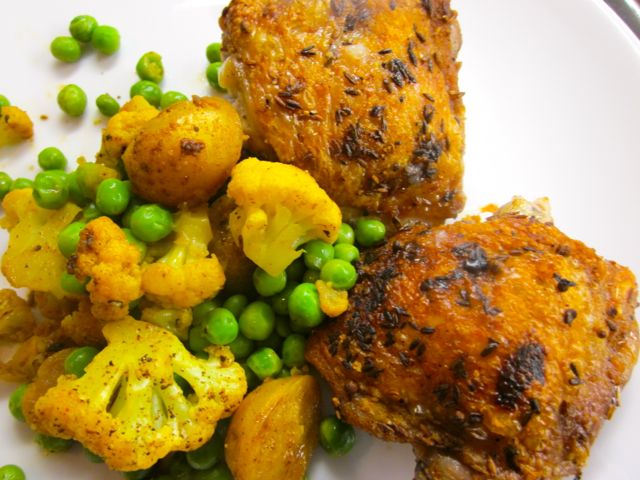
This is a very simple recipe for chicken thighs, but it yields delicious results. At least four hours before starting to cook, marinate the thighs in oil, garlic, coriander and cumin seeds, lemon zest, salt and pepper. When you are ready to cook, sear the thighs, skin side down, in a cast iron skillet, turn them, and finish roasting in the oven. Indian potatoes, peas and cauliflower are an excellent accompaniment.

Avoiding Additives and Preservatives

Make sure the spices do not contain colour and always used freshly squeezed lemon juice, as the concentrates are bitter and contain sodium benzoate.

Marinate the chicken for at least four hours

Sear the thighs skin side down

Turn the thighs and then roast until cooked through

Spiced chicken thighs

Ingredients:

¼ cup (60 ml) olive oil

5 garlic cloves, smashed

1½ tablespoons (25 ml) coriander seeds

1 tablespoon (15 ml) cumin seeds

1 teaspoon (5 ml) grated lemon zest

Kosher salt

Freshly ground pepper

1 tablespoon (15 ml) lemon juice

Eight 6-ounce (170 g) bone-in chicken thighs with skin

Preparation:

In a large bowl, whisk the olive oil with the garlic, coriander and cumin seeds, lemon zest, 1½ teaspoons (7 ml) of salt and ¾ teaspoon (3 ml) of pepper. Add the chicken and turn to coat, then cover and refrigerate for 4 hours or overnight.

Preheat the oven to 450° F (220° C). Heat a cast-iron skillet. Turn the chicken in the marinade and scrape off any solids; add to the skillet skin side down. Cook over moderately high heat until the skin is golden brown. Turn the chicken; transfer to the oven and roast for 15 minutes, until the juices run clear. Remove from the oven and drizzle with the lemon juice.

From Food and Wine

Paillard is a term used for meat, usually veal or chicken, that is pounded thin and then quickly seared on top on the stove. This recipe for chicken paillards from Martha Stewart Living is healthy and quick to make for a weeknight supper. In addition to the chicken, it includes roasted squash and onion, and a garnish of fried sage leaves and baby spinach. And, if you’ve had a tough day, pounding the chicken can be very therapeutic!

Avoiding Additives and Preservatives

The only thing that may contain artificial ingredients is the butter, which can contain colour. Look for a brand of butter that has only one ingredient: cream.

Toss the squash and onion with oil and put in the oven to roast.

Pound the chicken to a thickness of about a quarter-in

Fry the sage leaves

The sage should be crispy

The thin paillards sear quickly on top on the stove

Chicken paillards with squash, onion, fried sage and spinach

Ingredients:

½ small kabocha or acorn squash, unpeeled, seeded and cut lengthwise into ¾ -inch (1.9 cm) slices

1 small red onion, cut into wedges, root end attached

2 tablespoons (30 ml) extra-virgin olive oil

Coarse salt

4 skinless, boneless chicken-breast halves, 4 to 5 ounces each, (113 g to 141 g each), butterflied

Red pepper flakes

1 tablespoon (15 ml) unsalted butter

16 fresh sage leaves (from about 4 sprigs)

1 cup (250 ml) baby spinach leaves

Preparation:

Preheat oven to 425 degrees F (218 C). Distribute squash and onion evenly on 2 rimmed baking sheets. Drizzle with 1 tablespoon (15 ml) oil, season with salt, and toss to coat. Spread in a single layer and roast until squash is tender, about 15-25 minutes.

Meanwhile, pound chicken to a 1/8 to ¼ -inch (0.3 cm to 0.6 cm) thickness (use the smooth side of a meat tenderizer, a rolling pin or a heavy pot). Season on both sides with salt and red pepper flakes. Heat a large skillet to medium-high heat. Swirl in remaining tablespoon (15 ml) oil, then butter. Fry sage until just crisp, about 1 minute; let drain on a paper towel.

Working in 2 batches, add chicken to pan and cook until golden and cooked through, about 1 minute on each side. Divide chicken among 4 plates and top with spinach, squash, onion, and sage. Serves 4.

From Martha Stewart Living

Cooking fish wrapped in parchment paper—en papillote—yields great results. The fish is moist and tender and is cooked with a minimum of fat. This recipe from the March 2014 issue of Food and Wine calls for striped bass, but any kind of thick fillet would work. The fish is topped lemon slices, salt and bay leaves (I used thyme instead), wrapped in parchment, and baked for 15-20 minutes. Meanwhile, you sauté onions and garlic and then add tomatoes, cilantro, parsley, hot peppers and ground coriander to make a delicious, fresh-tasting salad.

Avoiding Additives and Preservatives

Ground spices may contain colour and anti-caking ingredients, so check the label.

Place lemon slices on fish and drizzle with olive oil

Wrap the fish in parchment paper and bake

Serve the baked fish with Lebanese salad

Ingredients:

½ cup extra-virgin olive oil

1 medium onion, minced

4 garlic cloves, minced

3 medium tomatoes, cut into ¼ -inch dice

2 cups lightly packed cilantro leaves, chopped

1 cup lightly packed parsley leaves, chopped, plus sprigs for garnish

2 jalapeños, minced

1 fresh hot red chile, seeded and minced, plus sliced chile for garnish

1 tablespoon ground coriander

Kosher salt

Four 6- to 7-ounce skinless striped bass fillets, about ¾ inch thick

8 thin slices of lemon

4 fresh bay leaves

Preparation:

Preheat the oven to 375°. In a medium skillet, heat 1/4 cup of the olive oil. Add the onion and garlic and cook over moderate heat, stirring, for 7 minutes. Off the heat, stir in the tomatoes, cilantro, parsley, jalapeños, minced red chile and coriander. Season with salt; let cool.

Arrange 4 large sheets of parchment paper on a work surface. Season the fillets with salt and set one in the center of each sheet. Top each fillet with 2 lemon slices and 1 bay leaf; drizzle with 1 tablespoon each of the remaining olive oil. Bring up 2 opposite sides of the parchment over the fish and fold to seal. Fold up the edges to create a packet.

Transfer the papillotes to a large rimmed baking sheet. Bake for 15 minutes, until slightly puffed.

Mound the tomato salad on plates. Carefully open the packets and set the fish on the salad. Garnish with the parsley sprigs and sliced chile; serve. Serves 4.

From the March 2014 issue of Food and Wine

This dish from the Barefoot Contessa is just as tasty as fried chicken, but is much healthier because it is baked. Chicken pieces are dipped in wine and mustard and then coated with panko, which are Japanese breadcrumbs. The recipe calls for a whole chicken, cut up, but I used chicken drumsticks and thighs instead. I found a half cup (125 ml) of mustard and a half cup (125 ml) of white wine to be much more liquid than I needed, so consider cutting the quantities in half. I cooked the chicken for 15 minutes longer than the recipe called for, as it was not done in 50 minutes.

Avoiding Additives and Preservatives

Panko usually does not contain preservatives, but check the label to be sure. Make sure your butter does not contain colour and look for a mustard without sodium benzoate or sulfites; I use President’s Choice Old Fashioned Dijon. I used a white wine from Frogpond Farm that has no sulfites added.

Dip the chicken in a mixture of wine and mustard, and then in the panko

Press remaining panko onto the chicken

Crispy mustard-roasted chicken

Ingredients:

4 garlic cloves

1 tablespoon (15 ml) minced fresh thyme leaves

Kosher salt and freshly ground black pepper

2 cups (500 ml) panko (Japanese bread flakes)

1 tablespoon (15 ml) grated lemon zest (2 lemons)

2 tablespoons (30 ml) good olive oil

2 tablespoons (30 ml) unsalted butter, melted

½ cup (125 ml) Dijon mustard, such as Grey Poupon

½ cup (125 ml) dry white wine

1 3½- to 4-pound (1.75 to 2 kg) chicken, cut in eighths

Preparation:

Preheat the oven to 350 degrees F (180 degrees C)

Place the garlic, thyme, 2 teaspoons (10 ml) salt, and 1 teaspoon (5 ml) pepper in a food processor fitted with the steel blade and process until the garlic is finely minced. Add the panko, lemon zest, olive oil, and butter and pulse a few times to moisten the bread flakes. Pour the mixture onto a large plate. In a shallow bowl, whisk together the mustard and wine.

Pat the chicken dry with paper towels. Sprinkle generously all over with salt and pepper.

Dip each piece in the mustard mixture to coat on all sides, and then place skin-side down only into the crumb mixture, pressing gently to make the crumbs adhere. Place the chicken on a sheet pan crumb-side up. Press the remaining crumbs on the chicken pieces.

Bake the chicken for 40 minutes. Raise the heat to 400 degrees F (200 degrees C) and bake for another 10 minutes, until the crumbs are browned and the chicken is cooked through. Serve hot, warm, or at room temperature. Serves 3-4.

From Foolproof, by the Barefoot Contessa

« Previous PageNext Page »