Archive for January, 2026

This is another great recipe from Alison Roman’s new cookbook, Something From Nothing. Season ground pork, brown it and add garlic, fennel seeds and chile flakes. Add stock and simmer for a few minutes before adding cooked pasta. Add the broccoli rabe or kale and simmer until it has wilted. Serve topped with cheese. Cook’s note: In place of the pork, you can use fresh sausage (hot Italian, turkey, chicken), casing removed, leaving out the fennel seed and chile flakes. I used fusilli pasta and omitted the lemon juice.

Avoiding Additives sand Preservatives

Make sure the dried spices don’t contain colour or anti-caking agents. I used Better Than Bouillon for the stock. Genuine Parmesan does not contain colour or preservatives. Look for the name stamped on the rind.

Spicy pork soup with pasta and Parmesan

Ingredients:

1 tbsp (15 ml) olive oil, plus more for drizzling

1 lb (450 g) minced (ground) pork

kosher salt and freshly ground black pepper

4 garlic cloves, thinly sliced

1 tbsp (15 ml) fennel seeds

½ tsp (2.5 ml) chile flakes, plus more to taste

6 cups (1.4 L) chicken or vegetable stock

6-8 oz (175–225 g) dried pasta

1 bunch broccoli rabe or kale, thick stems removed, chopped

Parmesan cheese, for grating or shaving (lots of it)

1 lemon, halved for squeezing (optional)

Preparation:

Heat the olive oil in a large pot over a medium-high heat. Add the pork and season with salt and pepper. Cook, resisting the urge to break it up too much at first. As it browns, break it up into small pieces; some of the pork will get very small (these bits will get very brown and crispy), and some will stay larger, in sausage-like clumps (these will be tender and juicier). Once the pork is about 80 per cent browned to your liking, 8–10 minutes, add the garlic. Continue cooking until the pork is well browned throughout and the garlic is softened and starting to brown around the edges, another 4–5 minutes.

Add the fennel seeds and chilli flakes. Give them a stir to toast in the pork fat, cooking for a minute or two. Add the stock, season with salt and pepper and bring to a simmer.

Meanwhile, cook the pasta in a medium pot of salted water until just before al dente. (It’ll continue to cook in the soup, but it’s good to give it a head start. Cooking raw pasta in a brothy soup makes the broth too starchy and cloudy.)

Once the soup has simmered for a few minutes, add the broccoli rabe or kale and the pasta, stirring to wilt the greens. Simmer until the rabe is tender and the flavours have mingled appropriately, another 5–8 minutes or so. Season with salt, pepper and more chilli flakes if you like.

To serve, ladle into bowls and top with a drizzle of olive oil and tons of cheese. Sometimes I squeeze lemon over, but not always (doesn’t need it, but it can be nice). Serves 4.

From Something from Nothing
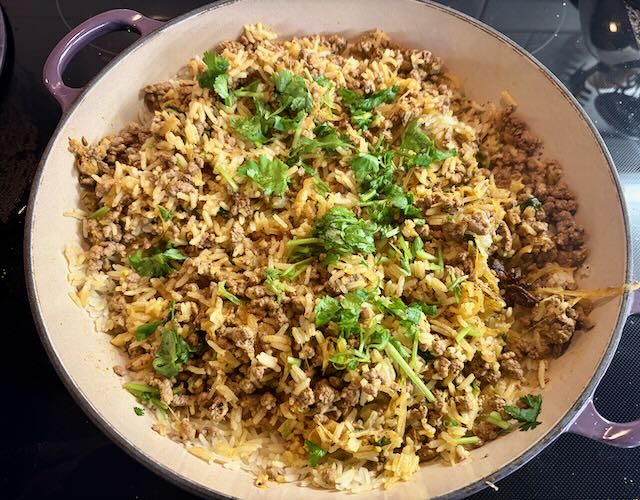
If you like Indian flavours, try this recipe from NYT Cooking. The list of spices is long, but the flavour is worth it. Cook the rice with spices. Meanwhile, cook the onion in ghee or butter and add the tomato paste and spices. Add the beef and cook for a few minutes before adding yogurt. Drizzle some milk over the rice and add the beef mixture to the rice. Add cilantro, cover and cook about 8 minutes. While it is cooking, make the raita by mixing yogurt, cumin, water, salt and pepper. When the biryani is done, fluff the rice, garnish with more cilantro and serve with the raita on the side. Cook’s note: I used butter instead of ghee.

Avoiding Additives and Preservatives

Check the dried spices to be sure they don’t contain colour or anti-caking agents. I used Better Than Bouillon paste for the broth, Simple brand tomato paste and Astro yogurt.

Ground beef biryani

Ingredients:

1 ½ cups (375 ml) basmati rice, rinsed

5 cardamom pods

1 cinnamon stick

2 whole cloves

2 cups (500 ml) low-sodium chicken broth

Kosher salt and pepper

3 tablespoons (45 ml) ghee or butter

½ large white onion, thinly sliced (about 1 ½ cups/375 ml)

1 tablespoon (15 ml) tomato paste

3 garlic cloves, minced

1 tablespoon (15 ml) minced fresh ginger

2 teaspoons (10 ml) garam masala

½ teaspoon (5 ml) ground Kashmiri chile powder or ¼ teaspoon (1.25 ml) cayenne

¼ teaspoon (1.25 ml) ground fennel

¼ teaspoon (1.25 ml) ground turmeric

1 star anise

½ teaspoon (2.5 ml) cumin seeds, divided

1 pound (454 g) ground beef

¾ cup (187.5 ml) Greek-style plain yogurt, divided

¼ cup (60 ml) whole milk

½ cup (125 ml) coarsely chopped cilantro leaves and tender stems, divided

Preparation:

In a large Dutch oven, combine rice, cardamom, cinnamon, cloves, broth and ½ teaspoon (2.5 ml) of salt over medium-high heat; cover and bring to a boil. Once it boils, reduce heat to low and cook for 10 minutes.

Meanwhile, heat 2 tablespoons (30 ml) of the ghee or butter in a 12-inch (30-cm) nonstick skillet over medium. Add onion, season with salt and pepper and cook, stirring occasionally, until softened, 2 minutes. Add tomato paste and cook, stirring, until fragrant and well blended, 2 minutes.

Push onion mixture to one side of the skillet and melt the remaining 1 tablespoon (15 ml) ghee or butter in the empty side. To the melted ghee or butter, add garlic, ginger, garam masala, chile powder, fennel, turmeric, star anise and ¼ teaspoon (1.25 ml) of the cumin; stir until well blended, 30 seconds.

Mix the spices into the onion mixture until well combined, then add beef and season with salt and pepper. Cook, stirring and breaking up the meat into small pieces, until no longer pink, about 3 minutes (it will finish cooking with the rice). Turn off heat and stir in ¼ cup (60 ml) of the yogurt until well incorporated.

Drizzle milk evenly over the rice, then add the beef mixture on top in an even layer. Scatter over half of the cilantro, cover and cook until the beef is tender and rice is cooked through, 8 minutes longer.

Meanwhile in a small bowl, combine the remaining ½ cup (125 ml) yogurt, ¼ teaspoon (1.25 ml) cumin and 2 tablespoons (30 ml) of water and season with salt and pepper. Mix well.

Gently fluff the rice with a fork and discard star anise and any other visible whole spices. Divide biryani among 4 bowls and garnish with the remaining cilantro. Serve warm, with the cumin raita on the side. Serves 4.

From NYT Cooking

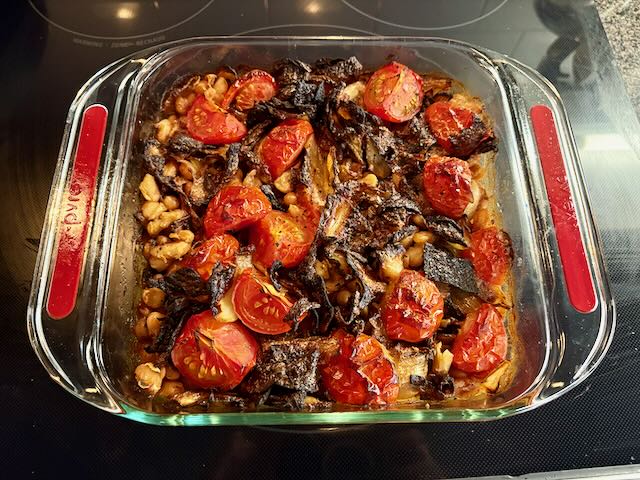
This recipe from Alison Roman’s new cookbook, Something from Nothing, creates a delicious recipe from humble ingredients. Brown cabbage, add shallots and season with salt and pepper. Place the beans in a baking dish and add the cabbage-shallot mixture. Add tomatoes, vinegar and water and bake for about an hour. Top with cheese before serving, if desired.

Avoiding Additives and Preservatives

Use butter without colour. I used Unico white beans and Eden Organic brand red wine vinegar. If you are using cheese, check to make sure it does not contain colour or preservatives.

Caramelized beans with tomato and cabbage

Ingredients:

4 tablespoons (60 ml) unsalted butter

4 tablespoons (60 ml) olive oil

½ small head (about 1½ pounds/680 g) cabbage, cut into 1-inch (2.54-cm) wedges

Kosher salt

Freshly ground black pepper

1 large shallot, thinly sliced

2 (15-ounce/443 ml) cans large white beans, such as butter beans, gigante, or cannellini, drained and rinsed

8 ounces (227 g) tomatoes, preferably small, halved if small, quartered or chopped if large

1 tablespoon (15 ml) white wine vinegar, sherry vinegar, or white distilled vinegar

A hunk of Parmesan cheese for grating on top, ricotta for spooning over, or feta for crumbling (optional)

Preparation:

Preheat the oven to 425°F (219°C).

Heat the butter and olive oil in a large skillet (preferably oven-safe) over medium heat. Add the cabbage, cut-side down, and season with salt and pepper. Cook, without disturbing or peeking, until the cabbage is deeply golden brown on one side, 8–10 minutes. Using tongs or a fish spatula, carefully flip and repeat on the other side, another 8–10 minutes.

Once the cabbage is well browned on both sides, add the shallots and season with salt and pepper. Cook, stirring or shaking the skillet occasionally to make sure the shallots can make contact with the pan, until they are nicely browned and totally tender, 5–7 minutes.

Meanwhile, place the beans in a 1½- to 2-quart (1½- to 2-L) baking dish. Once the cabbage and shallots are nicely browned and tender, add them to the baking dish, along with the tomatoes, vinegar, and 1 cup (250 ml) water. Season well with salt and pepper and rearrange the goods, adjusting some of the wedges of cabbage and pieces of tomato so that they make their way to the top. (They will get so delicious in the oven.)

Place in the oven and bake until the liquid has reduced by quite a bit, everything is bubbling up the sides of the dish in a sticky, caramelized way, and the top is delightfully browned, bordering on crisp, 50-60 minutes.

Remove from the oven and let cool slightly. Serve with or without cheese. Serves 4. The beans can be made 2 days ahead, wrapped, and refrigerated. Reheat in a 425°F (219°C) oven, uncovered, until warmed through and bubbling once more, 20–30 minutes. Leftovers can also be scooped into a skillet and rewarmed on the stovetop.

From Something from Nothing by Alison Roman

This recipe from America’s Test Kitchen makes an elegant light lunch or supper. Mix the Dutch baby ingredients, pour into a hot skillet and bake for about 20 minutes. Top the Dutch baby with lightly dressed arugula, burrata and sliced prosciutto. Cook’s note: I omitted the fresh herbs.

Avoiding Additives and Preservatives

I used San Danielle prosciutto, which is preserved with salt and Acetaia La Bonissma balsamic vinegar, which has no added sulfites. Both are available at our local Your Independent Grocer. Burrata typically does not contain additives or preservatives but check the label to be sure.

Dutch baby with burrata and prosciutto

Ingredients:

Dutch baby

¼ cup (60 ml) extra-virgin olive oil, divided

1¼ cups (6¼ ounces/177 grams) all-purpose flour

½ teaspoon (2.5 ml) table salt

4 large eggs

1 cup (250 ml) skim milk

2 tablespoons (10 ml) chopped fresh basil, oregano, thyme, parsley, and/or tarragon, plus extra for sprinkling

Topping

4 ounces (113 grams) burrata cheese, room temperature

¾ cup (187.5 ml) baby arugula

½ teaspoon (2.5 ml) extra-virgin olive oil, plus extra for drizzling

½ teaspoon (2.5 ml) balsamic vinegar, plus extra for drizzling

1 ounce (28 grams) thinly sliced prosciutto, torn into bite-size pieces

Preparation:

Dutch baby

Adjust oven rack to middle position and heat oven to 450 degrees F (232 degrees C). Grease 12-inch (30-cm) cast-iron skillet with 2 tablespoons (30 ml) oil, place skillet in oven, and heat until oil is shimmering, about 10 minutes.

Meanwhile, whisk flour and salt together in large bowl. In separate bowl, whisk eggs until frothy, then whisk in milk, basil, and remaining 2 tablespoons (30 ml) oil until incorporated. Whisk one-third of milk mixture into flour mixture until no lumps remain. Slowly whisk in remaining milk mixture until smooth.

Being careful of hot skillet handle, quickly pour batter into skillet and bake until Dutch baby puffs and turns golden brown (edges will be dark brown), about 20 minutes, rotating skillet halfway through baking.

Topping

While Dutch baby bakes, tear burrata into bite-size pieces over plate, collecting creamy liquid. Toss arugula with oil and vinegar and season with salt and pepper to taste.

Using pot holders, remove skillet from oven. Being careful of hot skillet handle, transfer Dutch baby to cutting board using spatula. Top Dutch baby with arugula mixture, followed by prosciutto and burrata and any accumulated liquid. Drizzle with extra oil and vinegar and season with pepper to taste. Slice into wedges and serve immediately. Serves 4.

From America’s Test Kitchen