New Finds


Epicurious.com is a great foodie site. It includes recipes from Bon Appetit and the late, great Gourmet that are searchable by keyword. It also includes a handy shopping list feature, photos and reader reviews. Last week I felt like trying a new recipe for pork stir-fry and Epicurious.com yielded this great recipe from Gourmet’s February 2001 issue. The sauce uses ingredients you are likely to have on hand and you can use a variety of vegetables. In addition to the red pepper and snow peas called for in the recipe, I used some leftover asparagus.

Assemble all your stir-fry ingredients before cooking

Stir fry the vegetables and cashews first
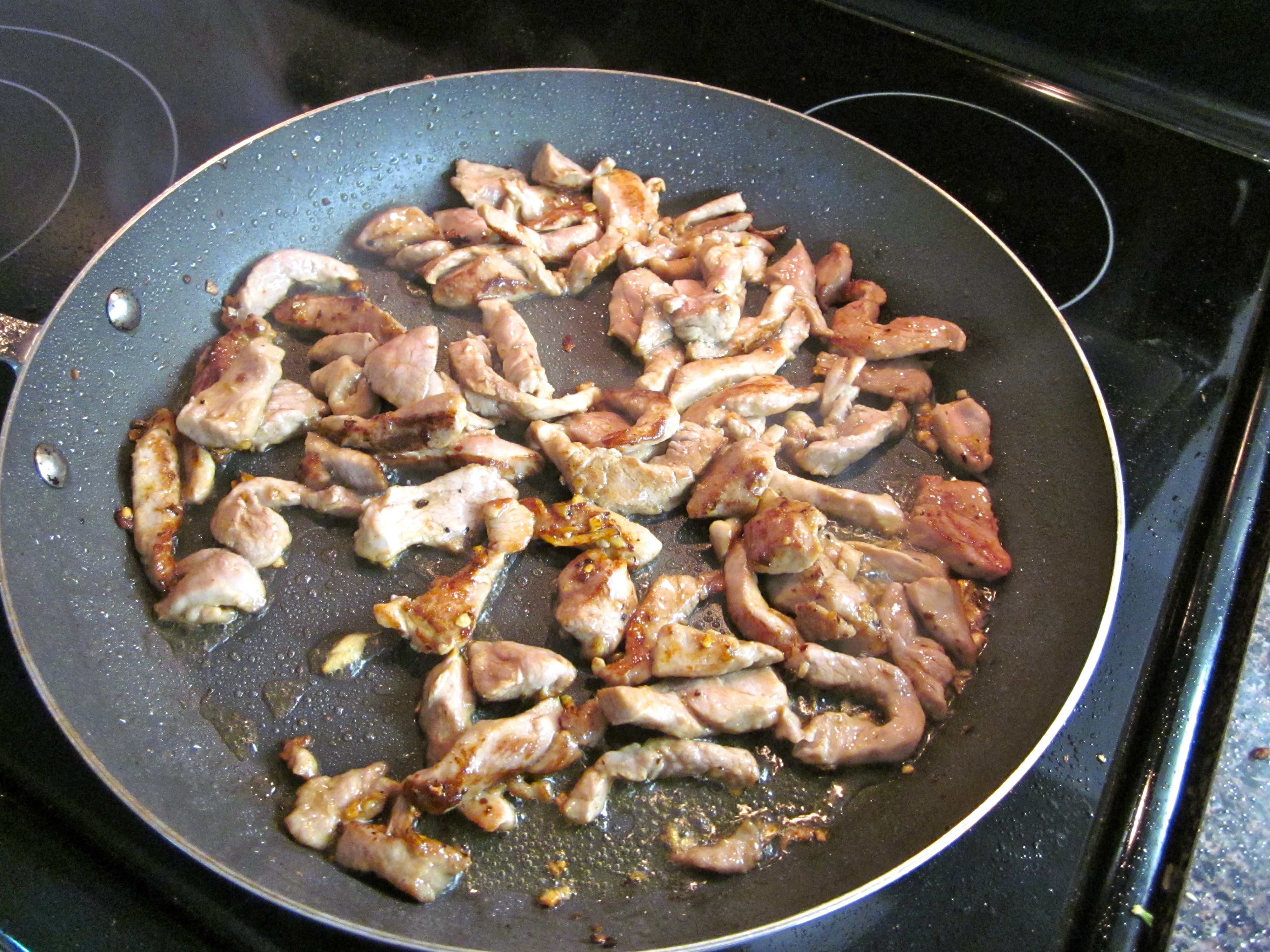
Then sear the pork; don't crowd the pan or the pork will steam instead of sear

Recombine the ingredients, add the sauce and heat through

Serve with rice

To avoid additives and preservatives in this recipe, use tamari instead of soy sauce. Tamari is preserved with alcohol, instead of a preservative such as sodium benzoate.

Ingredients:

1 tablespoon medium-dry Sherry
2 teaspoons cornstarch
3 tablespoons soy sauce
2 teaspoons Asian sesame oil
3/4 lb boneless pork loin, thinly sliced, then cut into 2- by 1/4-inch strips
1 teaspoon sugar
3 tablespoons peanut oil
2 teaspoons minced peeled fresh ginger
2 teaspoons minced garlic
1/2 teaspoon dried hot red pepper flakes
1 large red bell pepper, cut into 1/4-inch-thick strips
1/2 lb snow peas, trimmed
1 cup salted roasted cashews

Preparation:

Stir together Sherry, cornstarch, and 1 tablespoon soy sauce, then stir in sesame oil. Add pork, stirring to coat well, and let stand 10 minutes.

Stir together sugar and remaining 2 tablespoons soy sauce.

Heat a wok or large nonstick skillet over high heat until a bead of water dropped on cooking surface evaporates immediately. Add 1 1/2 tablespoons peanut oil, swirling wok to coat evenly, then stir-fry 1 teaspoon ginger, 1 teaspoon garlic, and 1/4 teaspoon pepper flakes until fragrant, about 5 seconds. Add bell pepper and stir-fry 2 minutes. Add snow peas and cashews and stir-fry until snow peas are crisp-tender, 1 to 2 minutes. Transfer vegetables to a bowl.

Heat remaining 1 1/2 tablespoons peanut oil in wok until just smoking, then stir-fry remaining ginger, garlic, and pepper flakes until fragrant, about 5 seconds. Add pork and stir-fry, separating strips, until browned and barely cooked through, 2 to 3 minutes. Add vegetables and sweetened soy sauce, then stir-fry until vegetables are just heated through, about 1 minute more. Serve with rice. Serves four.

From the February 2001 issue of Gourmet, found on Epicurious.com

This is a delicious new find from the Spring 2011 issue of the LCBO’s Food and Drink. Slices of pork tenderloin are pounded flat, dredged in flour, sautéed and then combined with a luscious maple-mustard-balsamic sauce. This recipe is quick and easy to make for a weeknight supper, but elegant enough to serve to company. Don’t overcook the pork, or it will become tough.

Flatten slices of pork tenderloin and season with salt and pepper

Dredge the pork and saute in batches

Simmer pork in a maple-mustard-balsamic sauce

To avoid additives and preservatives in this recipe, use butter without colour, mustard and chicken broth without preservatives and balsamic vinegar with no sulfites added. I served the medallions with yam frites.

Maple-mustard pork medallions

Ingredients:

2 small pork tenderloins, each ¾ to 1 lb (375 to 500 g)
Salt and freshly ground black pepper
2 tbsp (25 mL) unsalted butter
2 tbsp (25 mL) olive oil
¼ cup (50 mL) grainy mustard
2 tbsp (25 mL) maple syrup
4 tsp (20 mL) balsamic vinegar
¼ cup (50 mL) all-purpose flour
1 cup (250 mL) finely diced Vidalia or other sweet onion
2 cups (500 mL) low-sodium beef or chicken broth
2 to 3 tbsp (25 to 45 mL) thinly sliced green onions, snipped chives or chopped parsley

Preparation:

Remove pork’s exterior tough silver skins and any fat; then crosswise cut into 1½-inch-thick (4-cm) chunks. Up-end on plastic wrap; cover with more plastic. Use a meat pounder or heavy frying pan to easily flatten into medallions to about ½ inch (1 cm) thick. Lightly season with salt and more generously with freshly ground black pepper. (Do not use any salt if tenderloins were purchased as “seasoned.”) Refrigerate until needed, up to a day.

Melt butter and mix with olive oil (all of this mixture may not be needed). Stir mustard with syrup and vinegar. Assemble remaining ingredients, as medallions sauté very quickly.

Sauté pork medallions in 3 or 4 batches. Heat a large frying pan over medium heat until quite hot. Meanwhile, dip a few pieces of pork into flour; shake off excess. Add a tablespoon of oil mixture to pan and several pieces of pork—do not crowd the pan! Sauté, adjusting heat as needed, until browned, about 3 minutes per side. Keep on a deep plate while repeating as needed with remaining pork, flour and oil mixture. (The sautéed pork is pink inside.) Discard any remaining flour.

When finished sautéing (and without cleaning), return pan to heat. Add another 1 tsp (5 mL) oil mixture only if needed to sauté added onion. Sauté onion for 2 minutes or until softened. Slowly stir in broth; bring to a boil. Boil over medium-high heat 3 minutes to reduce slightly. Stir mustard mixture into sauce. Continue to bubble until sauce-like, about 6 minutes.

Return pork and any juices to sauce; heat 2 minutes, turning medallions once, or until hot. Serves 4 to 6.

From the Spring 2011 issue of Food and Drink

We love baked pasta dishes, and the March 2011 issue of Bon Appetit features several recipes, including this Rigatoni with Eggplant and Pine Nut Crunch. The vegetables are roasted and then combined with cooked pasta, Parmesan cheese and a tomato cream sauce.

Cut the eggplant, peppers and tomatoes into pieces of equal size

Roast the vegetables until tender

The tomato cream sauce adds richness and flavour

The end result is a hearty, gooey, delicious dinner.

Rigatoni with Eggplant and Pine Nut Crunch

To finish this vegetarian dish, top with mozzarella cheese and a crumble of Parmesan, basil, garlic and pine nuts and bake. I wanted to make this dish ahead, so I followed the recipe to the point where the vegetables, pasta, cheese and sauce are combined and placed in the baking dish. I then refrigerated it until I was ready to bake it, and, at that point, added the mozzarella and pine nut crunch. If you refrigerate before baking, add about 10 minutes to the cooking time.

To avoid additives and preservatives in this recipe, use Parmesan and mozzarella without colour and tomatoes and whipping cream with no preservatives added. To spice this recipe up, add hot pepper flakes when roasting the vegetables and to the Parmesan cheese.

Ingredients:

Nonstick vegetable oil spray

1 unpeeled large eggplant (1 1/2 to 1 3/4 pounds), cut into 1/2-inch cubes

2 medium yellow bell peppers, cut into 1/2-inch squares

2 cups grape tomatoes

3 large garlic cloves, divided

1/3 cup olive oil

2 cups (firmly packed) fresh basil leaves, divided

1 cup freshly grated Parmesan cheese, divided

1/4 cup pine nuts

1 28-ounce can whole tomatoes in juice

1 cup heavy whipping cream

1 pound rigatoni

1 pound whole-milk mozzarella cheese, cut into 1/2-inch cubes

Preparation:

Preheat oven to 425°F. Spray large rimmed baking sheet with nonstick spray; add eggplant and peppers. Cut tomatoes in half lengthwise; add to sheet. Using garlic press, squeeze 1 garlic clove onto vegetables. Drizzle vegetables with oil; toss. Sprinkle with salt and pepper. Roast vegetables until tender, stirring often, 35 to 45 minutes.

Combine 2/3 cup basil, 1/2 cup Parmesan, pine nuts, and 1 garlic clove in mini processor. Blend until crumbly. Season topping with salt.

Blend tomatoes with juice, cream, 1 1/3 cups basil, and 1 garlic clove in processor until smooth. Season sauce with salt and pepper.

Cook pasta in pot of boiling salted water until just tender but still firm to bite, stirring occasionally; drain. Return to pot. Toss with vegetables, sauce, and 1/2 cup Parmesan. Transfer to 13 x 9 x 2-inch baking dish. Sprinkle with mozzarella and pine nut topping.

Bake pasta until heated through, 25 to 35 minutes. Let stand 10 minutes and serve.

From the March 2011 issue of Bon Appetit

This new find from the March 2011 issue of Food and Wine is a lovely one-dish chicken recipe. The chicken pieces are simmered in a nicely spiced broth until cooked and are then removed. Add tomatoes, artichoke hearts, onion, preserved lemon and peas to the broth for a few minutes before returning the chicken to the pot to heat through.

Tomatoes, artichokes, minced onion and preserved lemon are added to the broth

The cooked chicken and peas are simmered until heated through

Preserved lemons are easy to make, and they add an incredible flavour. However, if you do make them yourself, the process takes about six weeks. I was able to find some at Pusateri’s that contained only lemons and salt – no artificial ingredients. I couldn’t find frozen artichoke hearts so I used canned ones and they worked just fine. I served the tagine with couscous and asparagus.

Chicken tagine with artichoke hearts and peas

To avoid additives and preservatives in this recipe, use an all-natural stock, such as Imagine brand, pure spices and preserved lemon with no colour or flavour added.

Ingredients:

One 4-pound chicken—legs separated into drumsticks and thighs, breasts halved crosswise, skin and visible fat removed

Salt and freshly ground black pepper

2 medium onions—1 coarsely chopped, 1 minced

1½ cups chicken stock or low-sodium broth

6 saffron threads, crumbled

½ teaspoon ground ginger

½ teaspoon ground coriander

½ teaspoon ground cumin

½ teaspoon hot paprika

¼ teaspoon turmeric

2 medium tomatoes, cut into eighths

¼ preserved lemon, rind only, minced (see Note)

8 frozen artichoke hearts, thawed and quartered

1 cup frozen petite peas, thawed

Preparation:

Season the chicken pieces with salt and pepper. In a medium, enameled cast-iron casserole, combine the chicken with the coarsely chopped onion and the chicken stock and bring to a boil. In a small bowl, mix the saffron threads with the ginger, coriander, cumin, paprika and turmeric. Stir the spice mixture into the broth. Cover and simmer over low heat, turning the chicken pieces once, until the breast pieces are just white throughout, about 25 minutes; transfer the breast pieces to a bowl and cover. Continue to simmer the drumsticks and thighs, covered, until done, about 15 minutes longer; transfer to the bowl with the breast pieces and keep covered.

Add the minced onion, the tomatoes, preserved lemon and artichoke hearts to the casserole and simmer over moderate heat until the broth is richly flavored, about 5 minutes. Season with salt and pepper and add the peas. Return the chicken to the casserole and simmer gently, turning a few times, until heated through. Serve the tagine in shallow bowls. Serves 4.

From the March 2011 issue of Food and Wine

This stir-fry from the March 2011 issue of Food and Wine comes together in no time. Julienned ginger adds great flavour to shrimp, snow peas and scallions, which are quickly stir-fried and then combined with a simple sauce.

Prepare stir-fry ingredients before you start cooking

Ginger, shrimp, snow peas and scallions are quickly stir-fried

Serve the stir-fry with steamed rice

To avoid additives and preservatives in this recipe, use organic chicken stock, such as Imagine brand and tamari instead of soy sauce. I haven’t been able to find a chile-garlic sauce that is additive-free, so I used Tabasco brand hot sauce.

Ingredients:

½ cup chicken stock or low-sodium broth

2 tablespoons low-sodium soy sauce

1 teaspoon Chinese chile-garlic sauce

1 teaspoon cornstarch

2 tablespoons vegetable oil

¼ cup fresh ginger, cut into fine matchsticks

½ pound snow peas

1 pound medium shrimp, shelled and deveined

4 small scallions, thinly sliced on the diagonal

Steamed rice, for serving

Preparation:

In a small bowl, whisk the chicken stock with the soy sauce, Chinese chile-garlic sauce and cornstarch.

In a large nonstick skillet, heat the vegetable oil until shimmering. Add the ginger matchsticks and stir-fry over moderately high heat until they are softened, about 1 minute.

Add the snow peas and stir-fry until crisp-tender and the ginger is beginning to brown, about 2 minutes.

Add the shrimp to the skillet and stir-fry for about 1 minute. Add the scallions and stir-fry for 30 seconds. Whisk the chile sauce, add it to the skillet and stir-fry until the shrimp are opaque throughout and the sauce is thickened, about 1 minute longer. Serve with steamed rice. Serves 4.

From the March 2011 issue of Food and Wine

I decided to make this recipe from the March 2011 issue of Cook’s Illustrated because I happen to have a vertical poultry roaster. It was a gift, and I had used it once before, with middling results. If you don’t have one, you can use a half-empty can of beer (yes, this is also how you make that famous barbecue dish known as beer-can chicken).

But there is no barbecue here at the apartment, so I am on the hunt for good oven-roasted chicken recipes. Boy, have I ever found one. This chicken is incredible. It has great flavour and the meat is tender and juicy, with crisp skin. The trick – aside from the vertical roaster – is marinating the chicken in a flavourful paste and then roasting it at two temperatures.

First, make the paste, spread it under the skin and all over the chicken, and marinate for several hours. Then put the chicken on the vertical roaster. Cook at 325 degrees for about an hour.

Marinate chicken in flavourful paste and place on vertical roaster

It looks like this when it comes out of the oven the first time.

Chicken after an hour at 325 degrees

Then crank up the oven to 500 degrees. When the oven is ready, put the chicken back in, making sure to add water to the pan under the roaster to prevent smoking. You will still get some smoke, but the finished product is worth it.

Finishing the chicken in a 500-degree oven crisps the skin

I have included the recipe for the spicy mayonnaise, but I didn’t go to all that work. I simply combined Hellman’s mayo with onion, garlic, lime juice, cilantro, mustard and pickled jalapeno and it was fine. To avoid additives and preservatives in this recipe, be sure your dried spices are 100-per-cent pure and use fresh lime juice.

Peruvian Roast Chicken with Garlic and Lime

Ingredients:

This recipe calls for a vertical poultry roaster. If you don’t have one, substitute a 12-ounce can of beer. Open the beer and pour out (or drink) about half of the liquid. Spray the can lightly with nonstick cooking spray and proceed with the recipe. If the top of the chicken is becoming too dark during the second roasting, place a 7-inch-square piece of foil over the neck and wingtips. If habanero chiles are unavailable, 1 tablespoon of minced serrano chile can be substituted. Wear gloves when working with hot chiles.

3 tablespoons extra-virgin olive oil

¼ cup lightly packed fresh mint leaves

2 tablespoons kosher salt

6 medium garlic cloves , peeled and roughly chopped

1 tablespoon ground black pepper

1 tablespoon ground cumin

1 tablespoon sugar

2 teaspoons smoked paprika

2 teaspoons dried oregano

2 teaspoons finely grated zest and 1/4 cup juice from 2 limes

1 teaspoon minced habanero chile (see note)

1 (3 1/2-to 4-pound) whole chicken

Preparation:

Process all ingredients except chicken in blender until smooth paste forms, 10 to 20 seconds. Using fingers or handle of wooden spoon, carefully loosen skin over thighs and breast and remove any excess fat. Rub half of paste beneath skin of chicken. Spread entire exterior surface of chicken with remaining paste. Tuck wingtips underneath chicken. Place chicken in gallon-size zipper-lock bag and refrigerate at least 6 hours and up to 24 hours.

Adjust oven rack to lowest position and heat oven to 325 degrees. Place vertical roaster on rimmed baking sheet. Slide chicken onto vertical roaster so chicken stands upright and breast is perpendicular to bottom of pan. Roast until skin just begins to turn golden and instant-read thermometer inserted into thickest part of breast registers 140 degrees, 45 to 55 minutes. Carefully remove chicken and pan from oven and increase oven temperature to 500 degrees.

When oven is heated to 500 degrees, place 1 cup water in bottom of pan and return pan to oven. Roast until entire skin is browned and crisp and instant-read thermometer registers 160 degrees inserted in thickest part of breast and 175 degrees in thickest part of thigh, about 20 minutes (replenish water as necessary to keep pan from smoking), rotating bird 180 degrees halfway through cooking.

Carefully remove chicken from oven and let rest, still on vertical roaster, 20 minutes. Using kitchen towel, carefully lift chicken off vertical roaster and onto platter or cutting board. Carve chicken and serve, passing Spicy Mayonnaise separately.

Spicy Mayonnaise

If you have concerns about consuming raw eggs, 1/4 cup of an egg substitute can be used in place of the egg.

Ingredients:

1 large egg (see note)

2 tablespoons water

1 tablespoon minced onion

1 tablespoon juice from 1 lime

1 tablespoon minced fresh cilantro

1 tablespoon canned pickled jalapeño pepper, minced

1 medium garlic clove, minced or pressed through garlic press (about 1 teaspoon)

1 teaspoon yellow mustard

½ teaspoons kosher salt

1 cup vegetable oil

Preparation:

Process all ingredients except oil in food processor until finely chopped, about 5 seconds. With machine running, slowly drizzle in oil in steady stream until mayonnaise-like consistency is reached, scraping down bowl as necessary.

From the March 2011 issue of Cook’s Illustrated

This recipe from the January/February issue of Everyday Food is quick, light and tasty. Simply steam rice with scallions and ginger and then add frozen peas.

Add peas to rice steamed with scallions and ginger

While the rice is standing, toss shrimp with spices and then quickly sear.

Toss shrimp with spices

Sear the shrimp quickly

Dinner will be on the table in 30 minutes.

Spiced shrimp with ginger rice and peas

To avoid additives and preservatives in this recipe, make sure the shrimp and spices are free of chemicals and artificial colour.

Ingredients:

4 tsp vegetable oil
2 scallions, white and green parts separated and thinly sliced
1 Tbsp. minced peeled fresh ginger
1 cup long-grain white rice
coarse salt and ground pepper
1 cup frozen peas
1 pound large shrimp, peeled and deveined
½ tsp ground cumin
½ tsp ground coriander
lime wedges, for serving

Preparation:

In a medium saucepan, heat 2 tsp oil over med-high heat. Add scallion whites and ginger and cook, stirring often, until soft, 3 minutes.

Add rice and 1½  cups water and season with salt and pepper. Bring to a boil; cover, reduce to a simmer, and cook until rice is tender, about 15 minutes. Remove from heat and top with peas. Let stand, covered, 5 minutes, then add scallion greens and fluff rice with a fork.

Meanwhile, in a medium bowl, toss shrimp with cumin and coriander and season with salt and pepper. In a large skillet, heat 2 tsp oil over med-high heat. Add shrimp and cook, stirring occasionally, until opaque throughout, about 4 minutes. Serve shrimp with rice and lime wedges. Serves 4.

From the January/February issue of Everyday Food

The March 2011 issue of Food and Wine includes a number of recipes by Sanjeev Kapoor, author of How to Cook Indian. I’m not sure I need a 600+ page Indian cookbook, but I did enjoy this Dhaba Chicken Curry recipe that was featured in the article.

First, bloom the spices in warm oil and then add finely chopped onion and garlic.

Bloom the spices in warm oil

Add onions and garlic

Add tomato sauce and turmeric. Finally, add chicken breasts or thighs and simmer until done. As usual, I find it takes longer than 10 minutes to cook a chicken breast or thigh. I suggest you cook them for 15 minutes and then cut in to make sure they are cooked.

Sprinkle with garam masala and cilantro and serve. I served this curry with Indian-spiced potatoes, peas and cauliflower (see January 30, 2011 Eye for a Recipe posting for the recipe). We also found some additive-free Patak’s Original Pappadums, which you just microwave for 30 seconds.

We served the Dhaba Chicken Curry with Indian-spiced vegetables and pappadums

To avoid additives and preservatives in this recipe, make sure your spices are 100% pure.

Ingredients:

3 onions, coarsely chopped

2 garlic cloves

One 1-inch piece of fresh ginger, peeled and chopped

1/4 cup vegetable oil

1 tablespoon ground coriander

1/2 teaspoon ground cumin

1/2 teaspoon cayenne pepper

1/4 teaspoon cinnamon

Pinch of ground cloves

Pinch of ground cardamom

1/4 teaspoon turmeric

1 cup tomato sauce

Four 6-ounce chicken breast halves on the bone, skinned

Salt

1 cup water

Garam masala, for sprinkling

2 tablespoons chopped cilantro

Directions:

In a food processor, chop the onions. Add the garlic and ginger and process until they are finely chopped.

In a medium, enameled cast-iron casserole, heat the vegetable oil. Add the coriander, cumin, cayenne, cinnamon, cloves and cardamom and cook over low heat until fragrant, about 1 minute. Add the onion mixture and cook over high heat, stirring occasionally, until the mixture is golden brown, about 6 minutes. Add the turmeric and tomato sauce and simmer over moderately high heat, stirring occasionally, until slightly thickened, about 3 minutes.

Season the chicken breasts with salt and add them to the casserole. Coat the chicken with the sauce. Add the water, cover and bring to a boil. Simmer over low heat, turning a few times, until the chicken is white throughout, about 10 minutes. Season the chicken curry with salt.

Transfer the chicken and sauce to a serving bowl. Sprinkle garam masala on top, garnish with the cilantro and serve. Serves 4. Serve with Basmati rice or naan.

From the March 2011 issue of Food and Wine

This new find from the January 2011 issue of Bon Appetit combines apricot preserves and miso to make a tangy and elegant sauce for pork tenderloin. The sauce, which is quick and easy to make, is brushed over the tenderloin before it goes into the oven and once while it is cooking.

Apricot-miso glaze

While the pork is resting, add a little chicken stock to the sauce, reduce it and then spoon it over the sliced pork.

Roast pork tenderloin with apricot-miso glaze

Miso paste is an all-natural ingredient that adds great depth of flavour to many dishes. It is available at most good supermarkets keeps for months in the fridge. To avoid additives and preservatives in this recipe, look for apricot jam or preserves that are all-natural. I used Greaves Pure Apricot Jam. I couldn’t find Champagne vinegar with no sulfites added, so I substituted Eden Organic Red Wine Vinegar and it worked fine. Also be sure to use an all-natural chicken stock, such as Imagine brand.

Ingredients:

Nonstick vegetable oil spray

5 tablespoons apricot preserves

¼ cup red miso

¼ cup Champagne vinegar

2 teaspoons finely grated orange peel

1 large garlic clove, chopped

2 pork tenderloins (1 pound each)

½ cup low-salt chicken broth

Preparation:

Preheat oven to 425°F. Coat large rimmed baking sheet with oil spray. Combine preserves, miso, vinegar, orange peel, and garlic in small pot over medium heat. Cook until thickened, 1 to 2 minutes. Reserve.

Sprinkle pork with salt and pepper. Place on prepared baking sheet, tucking thin end under to ensure even cooking. Brush with 2 tablespoons apricot glaze; roast 12 to 15 minutes. Turn pork over with tongs and brush with 3 more tablespoons glaze. Continue to roast until instant-read thermometer inserted into center of pork registers 150°F, 8 to 10 minutes longer.

Transfer pork to cutting board, tent with foil, and let rest 10 minutes. Meanwhile, add chicken broth to remaining apricot glaze. Bring to simmer and cook until reduced to 2/3 cup sauce, about 5 minutes. Season with salt and pepper.

Slice pork crosswise into ½- to ¾- inch-thick slices and arrange on platter. Spoon sauce over and serve. Serves 6.

From the January 2011 issue of Bon Appetit

The other night we felt like having baked fish and chips, so I perused the Internet for a recipe for oven-baked fries. I tried this one from shockinglydelicious.com and, I must say, they were delicious. The fries bake for 30 minutes before being tossed with salt, Parmesan cheese and garlic. After another 10 minutes in the oven they are tossed with chopped parsley.

The fries are tossed with Parmesan, garlic and salt

To avoid additives and preservatives in this recipe, make sure your Parmesan cheese does not contain colour.

The fries are tossed with chopped parsley before serving

Ingredients:

4 large potatoes, keep skin on (about 2 pounds)
1-2 tablespoons olive oil
1 1/2 teaspoons ground thyme (or use poultry seasoning or dried oregano)
A few grinds of fresh black pepper
1/2 teaspoon salt
1/4 cup grated Parmesan cheese
1/2 teaspoon crushed fresh garlic
1/4 cup finely minced fresh Italian parsley

Preparation:

Heat oven to 425 degrees.

Wash and dry potatoes, and cut them into French fry-size strips. Place in large bowl and drizzle oil over. Toss until coated. Sprinkle with thyme and pepper and toss well until evenly coated.

Place on ungreased baking sheet in a single layer and bake for 30 minutes. While potatoes are baking, rinse out bowl and dry. In same bowl, stir together salt, cheese and garlic. Set aside.

Remove potatoes from oven and scrape into bowl with cheese. Using two spoons, toss potatoes until garlicky cheese coats them. Scrape potatoes back onto baking sheet in a single layer, and bake another 10 minutes. Make sure all cheese mixture is on potatoes. (Do not wash bowl yet.)

Remove from oven and return to same bowl. Add parsley and toss until hot fries are coated with parsley. Makes 4 servings.

From shockinglydelicious.com

« Previous PageNext Page »