New Finds


The February issue of Bon Appetit has a great article on braising that includes this delicious one-pot chicken dish. Chicken pieces are dredged in seasoned flour and browned, then slowly braised with tomatoes prosciutto, roasted peppers, pearl onions, garlic, parsley, bay leaves, wine and Port.

Chicken pieces are braised with prosciutto, vegetables and Port

I made this a day ahead to allow the flavours to blend. While the recipe includes directions on how to thicken the sauce, I left it as is and it was great.

Portuguese Chicken

Ingredients in this recipe that may include additives and preservatives include the canned tomatoes, roasted peppers, prosciutto, white wine, Dijon mustard and butter. I used Unico tomatoes and roasted peppers, President’s Choice grainy Dijon mustard and Gay Lea unsalted butter. Ask your butcher or the person at the deli counter to check the ingredients for the prosciutto; you should be able to find a brand with just pork and salt. Use a wine with no sulfites added or substitute water or organic chicken broth.

Look for prosciutto without artificial preservatives

Ingredients:

1 cup all purpose flour
1 tablespoon plus 1/4 teaspoon Hungarian sweet paprika
1 3- to 3 1/4-pound chicken, cut into 8 pieces
2 tablespoons extra-virgin olive oil
1 14.5-ounce can diced tomatoes in juice
4 ounces thinly sliced prosciutto, chopped
12 cipolline onions or 1-inch-diameter pearl onions, blanched 1 minute, peeled
2 large roasted red peppers from jar, halved, cut into 3/4-inch-wide strips
6 large garlic cloves, pressed
4 large fresh Italian parsley sprigs
4 large fresh bay leaves, bruised
1/2 cup dry white wine
1/2 cup tawny Port
1 tablespoon Dijon mustard
1 tablespoon tomato paste
1 tablespoon butter, room temperature (optional)

Preparation:

Preheat oven to 350°F. Whisk 1 cup flour, 1 tablespoon paprika, 1 1/2 teaspoons salt, and 1/2 teaspoon freshly ground black pepper in large bowl. Add chicken pieces to seasoned flour, 1 at a time, and turn to coat. Heat oil in heavy large skillet over medium-high heat.

Add chicken, skin side down, and sauté until brown, 3 to 5 minutes per side. Transfer chicken to large ovenproof pot and arrange in a single layer; reserve skillet.

Top chicken with tomatoes and juice, prosciutto, onions, peppers, garlic, parsley, and bay leaves; sprinkle with 1/4 teaspoon paprika. Add wine and Port to reserved skillet. Bring to boil, scraping up browned bits. Remove from heat. Whisk in mustard and tomato paste; pour mixture over chicken and bring to boil. Cover; transfer to oven.

Braise chicken until very tender, about 1 1/2 hours. Discard bay leaves and parsley. Using tongs, transfer chicken and toppings to platter. Return sauce in pot to simmer. If thicker sauce is desired, stir 1 tablespoon flour and butter in small bowl until smooth paste forms. Add flour paste to sauce and whisk to blend. Simmer until sauce thickens to desired consistency, whisking often. Season sauce to taste with salt and pepper. Spoon over chicken and serve. Serves 4.

From the February 2011 issue of Bon Appetit

This recipe from Canadian Living is a great way to make a cheese tray even more delectable. Figs are simmered with wine and spices until tender and syrupy. This conserve keeps well for several weeks and is especially good with blue cheese and cheddar.

Serve the fig and wine conserve as part of a cheese and fruit tray

To avoid additives and preservatives in this recipe, use figs and wine with no sulfites or colour added.

Ingredients:

1 lb (454 g) dried light-colour figs

1-1/2 cups (375 mL) white wine

1 cup (250 mL) granulated sugar

2 cinnamon sticks, broken

4 cardamom pods, crushed

2 whole cloves

Preparation:

Trim tough tips off figs; quarter. In saucepan, bring wine and sugar to boil. Tie cinnamon, cardamom and cloves in cheesecloth; add to syrup along with figs. Reduce heat and simmer until figs are tender and liquid is thick and syrupy, about 25 minutes. Let cool to room temperature. Keeps well in the fridge for several weeks. Makes about three cups.

From Canadian Living

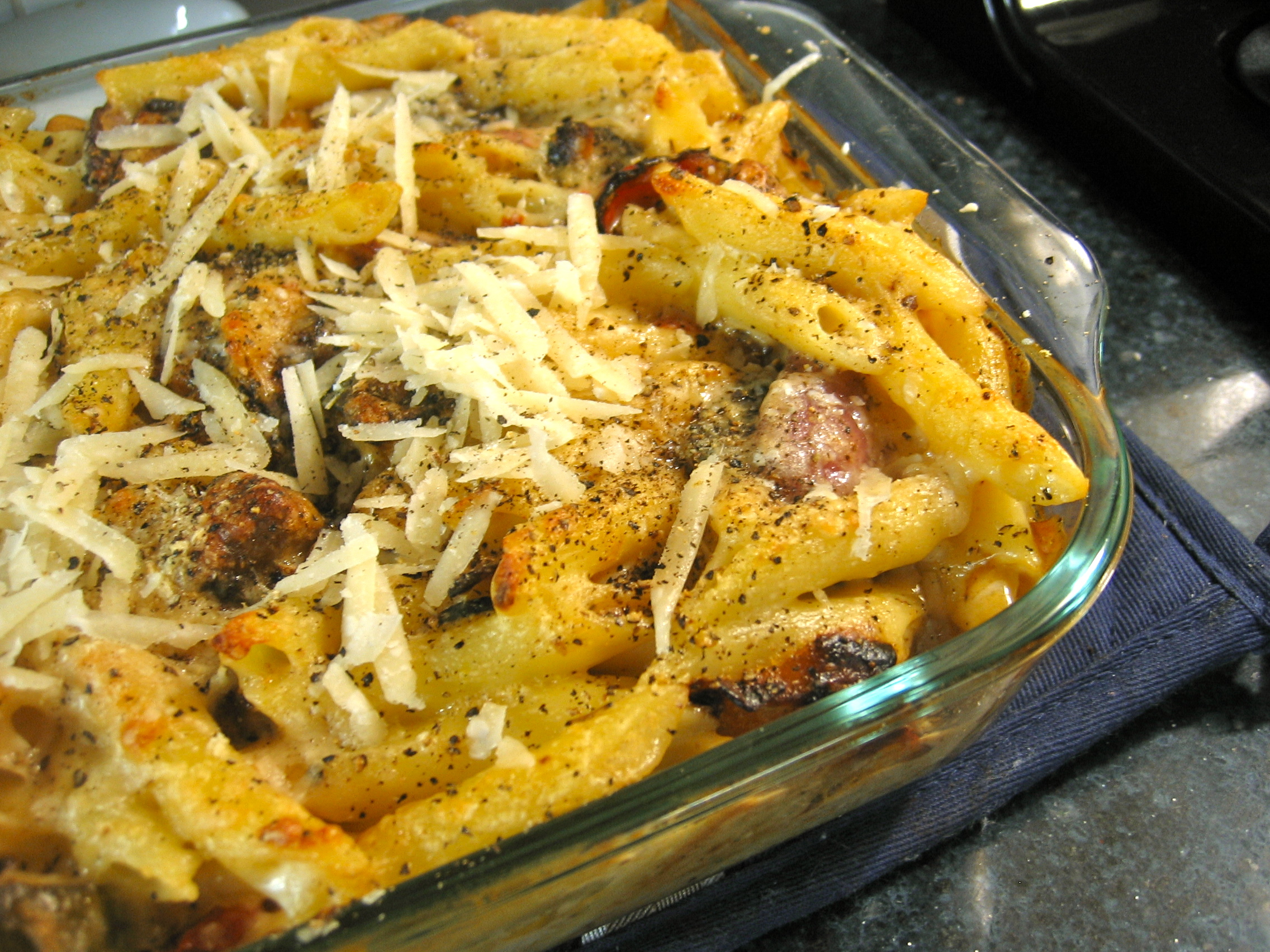
This is a delicious vegetarian pasta dish from Lucy Waverman that was published in the December 14, 2010 issue of The Globe and Mail. Vegetables are tossed with herbs and balsamic vinegar and are then roasted until brown and caramelized.

Vegetables are tossed with herbs and balsamic vinegar before roasting

They are then combined with cooked penne, butter, milk, cream and three kinds of cheese and baked until piping hot. Served with a green salad, this would be perfect for a casual dinner party.

Pasta with roasted vegetables

To avoid additives and preservatives in this recipe, use a balsamic vinegar with no sulfites added and cheese that does not contain colour.

Ingredients:

2 medium red onions

4½ cups small butternut squash, peeled and cut into 1-inch chunks

2 red peppers, cut into 1-inch chunks

2 zucchini, cut into 1-inch chunks

1 eggplant, cut into 1-inch chunks

4 plum tomatoes, quartered and seeded

1 banana pepper, sliced on diagonal into thin strips

1 tablespoon chopped fresh thyme or 1 teaspoon dried

2 tablespoons chopped fresh rosemary or 2 teaspoons dried

¼ cup olive oil

2 tablespoons balsamic vinegar or lemon juice

Salt and freshly ground pepper, to taste

1 pound (500 grams) penne

¼ cup butter

¼ cup flour

2 cups milk

½ cup whipping cream

1 cup grated Fontina

1 8-ounce (250-gram) ball fresh mozzarella, grated

1 cup grated Parmesan

Preparation:

Preheat oven to 450 F. Cut onions in half and cut each half into 4 wedges. Remove root end and separate onion pieces. Combine onion, butternut squash, red peppers, zucchini, eggplant, tomatoes and banana pepper in a large bowl.

Combine thyme, rosemary, olive oil and vinegar and season with salt and pepper. Toss with vegetables until well coated. Divide all vegetables between 2 large rimmed baking sheets and roast for 40 minutes, stirring every 10 minutes and switching tray positions in oven halfway through, until vegetables are cooked through and browned. Remove from oven and reduce heat to 350 F.

Cook pasta in boiling salted water according to package directions until slightly undercooked. Drain. Return to pot.

Heat butter in another pot over medium-high heat. Add flour and stir together until smooth. Combine milk and cream and slowly add to pot, whisking constantly, until combined. Bring to a boil, remove from heat and add Fontina, mozzarella and ½ cup Parmesan. Season with salt and pepper.

Add sauce to pasta and toss to combine. Stir in vegetables. Transfer to an oiled 9 x 13-inch baking dish and bake for 30 minutes or until sauce bubbles and mixture is hot. Sprinkle with remaining ½ cup Parmesan and lots of black pepper. Serves 8.

By Lucy Waverman in the December 14, 2010 issue of The Globe and Mail

This is a great new find from the September 2010 issue of Everyday Food. The recipe calls for sweet Italian sausage and bone-in chicken breasts, but I used hot Italian sausage and chicken thighs instead. The sausage and chicken are browned and then simmered with onion, potatoes and celery until cooked through.

Brown and drain the sausage

Brown the chicken; I used thighs instead of breasts

Cook the vegetables briefly before returning the meat to the pot

The chicken is then removed and the remaining ingredients are combined with vinegar and fresh oregano. Dinner is ready in about an hour and there’s only one pot to wash!

One-pot chicken with sausage and potatoes

To avoid additives and preservatives in this recipe, ask your butcher for an all-natural sausage and use a red wine vinegar with no sulfites added, such as Eden organic brand.

Ingredients:

2 teaspoons extra-virgin olive oil

½ pound sweet Italian sausage, casings removed, broken into ¾-inch pieces

2 bone-in chicken breast halves (with wings attached if desired; 1 ½ pounds total), skin removed, halved

Coarse salt and ground pepper

1 yellow onion, diced medium

1 pound waxy potatoes, halved or quartered if large

3 stalks celery, cut into 1 ½-inch pieces, plus leaves for garnish

2 tablespoons red-wine vinegar

1 tablespoon fresh oregano leaves

Directions:

In a large Dutch oven or heavy pot, heat oil over medium-high. Add sausage and cook, stirring occasionally, until brown all over, about 4 minutes. With a slotted spoon, transfer sausage to a dish. Season chicken on both sides with salt and pepper and add to pan, meaty side down. Cook until golden brown on both sides, 10 minutes, flipping once. Transfer chicken to dish with sausage.

Add onion, potatoes, and celery to pot and season with salt and pepper. Cook, stirring often, until onion is soft, 3 to 5 minutes. Return sausage and chicken, meaty side up, to pot and add 1 cup water. Bring to a boil, then cover and reduce heat to low. Simmer until potatoes are tender and chicken is cooked through, about 20 minutes.

Remove lid and increase heat to high; boil until liquid is reduced to 1/2 cup, 5 minutes. Transfer chicken to a platter. Add vinegar and oregano to vegetables and sausage and stir to combine. With slotted spoon, transfer vegetables and sausage to platter with chicken and top with celery leaves. Transfer sauce to a gravy boat and serve alongside chicken. Serves 2-4.

From the September 2010 issue of Everyday Food

I love duck, but it’s not the easiest thing to make. Typically, the duck is roasted in the oven and involves a number of labour-intensive steps, including removing copious amounts of fat from the pan. And by the time the meat is cooked, the skin may not be crisp. A few years ago I happened upon this much easier method of cooking duck in The Complete Canadian Living Cookbook. The duck is rubbed with brandy and salt and refrigerated for 1-3 days. It is then steamed in a bamboo steamer on top of the stove, which releases the fat and keeps the meat tender and moist.

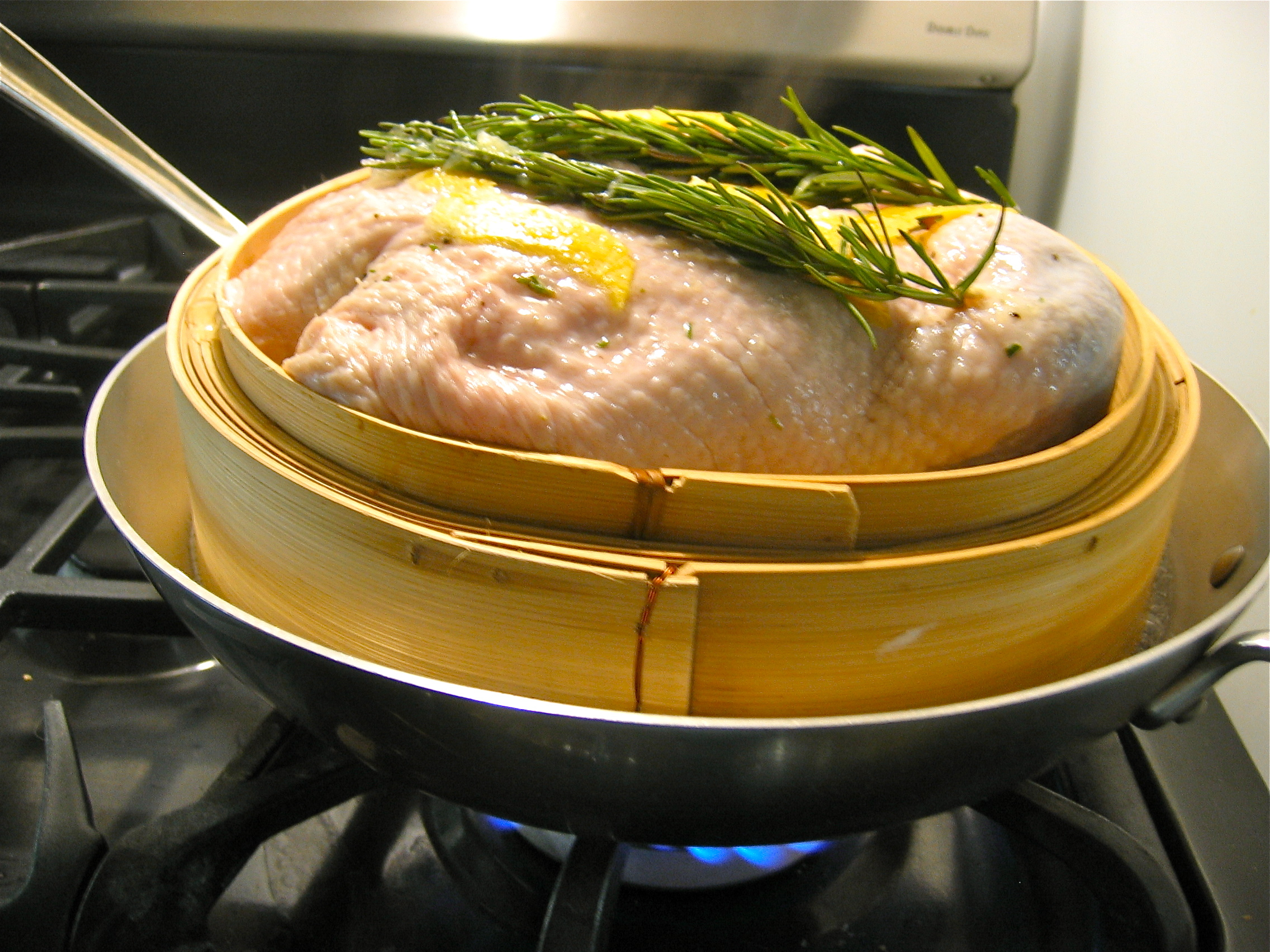
The duck is placed in a steamer with lemon rind and rosemary

Place the steamer over simmering water in a wok or pan

Cover and steam for 70-85 minutes

Finally, the duck is given a quick turn in the oven to crisp the skin. It’s quick, easy and produces delicious results.

Roast for 30 minutes to make the skin crispy

Ingredients:

1 duck, 4 lb/2kg
2 tsp(10 mL) brandy or vermouth
1/3 cup coarse salt, or 1/4 cup/75 ml table salt
4 cloves garlic, mashed
2tbsp (25 mL) chopped fresh rosemary
2tsp (10 mL) pepper
1 lemon
4 sprigs sprigs fresh rosemary
2 tbsp(25 mL) liquid honey

Preparation:

With paper towels, pat duck dry. Rub inside and out with brandy then salt, distributing evenly. Place in dish and cover with plastic wrap; refrigerate for 24 hours or up to three days. Rinse salt off duck under cold running water; dry with paper towels. Pull off excess fat in cavity. Cut off tail bone and excess neck skin. Using skewer or toothpick, prick skin all over, being careful not to prick fat and meat underneath.

In small bowl, lightly mash together garlic, chopped rosemary and pepper; rub inside cavity. Peel off strips of lemon rind. Set aside.

In wok or large pot with 2 inches (5 cm) of water, bring all but 4 strips of the lemon rind and 2 of the rosemary sprigs to boil. Place duck, breast side up, in large bamboo steamer; lay remaining lemon rind and rosemary sprigs on top. Place steamer on wok. Reserving 1-1/2 tsp (7 mL) lemon juice, squeeze remaining juice over duck. Cover and steam over medium-high heat for 70-85 minutes, adding more boiling water to  maintain level as necessary.

Remove duck and carefully pour out liquid from body cavity. (Make-ahead: Let cool for 30 minutes; transfer to glass baking dish and refrigerate until cold. Cover with plastic wrap and refrigerate for up to 24 hours.) Discard rosemary and lemon rind.

In small bowl, mix honey with reserved lemon juice; brush some over bottom of duck. Place duck, breast side down, on rack in roasting pan. Roast in 425°F (220°C) oven for 15 minutes or until golden. Turn duck over; brush all over with remaining honey mixture. Roast for about 15 minutes longer or until well browned, watching carefully to avoid burning. Serves 6.

From the Complete Canadian Living Cookbook

I am not a baker. To me, baking is among the black arts, calling for a precision, dedication to form and an intuitive understanding of such terms as “fluffy” and “soft peaks” that I do not possess.

But it is Christmas, so I try to make an effort. Last year, I saw a recipe called “The Best Shortbread” in the November 2009 issue of Cook’s Illustrated. It didn’t look too difficult, so I decided to give it a try. I prepared the ingredients carefully, including the butter. Because we use butter without preservatives, and because we use so little of it, I keep it in the freezer. And frozen butter is the same as cold butter, right?

Wrong.

The dough would not form and I ended up throwing the entire mess into the garbage. Then I made it again, with cold butter, and it was very, very good.  I made it again this week, and it turned out beautifully, so I’m sure that it will work for you.

This recipe uses oat flour, which you make by whirling rolled oats in the food processor until they are very fine.

Pulse rolled oats in a food processor to make oat flour

It also uses a springform pan to shape the dough. I couldn’t find a 2-inch cookie cutter, so I used a glass to cut out the centre and a ball of aluminum foil to fill the space.

Press the dough into a springform pan collar

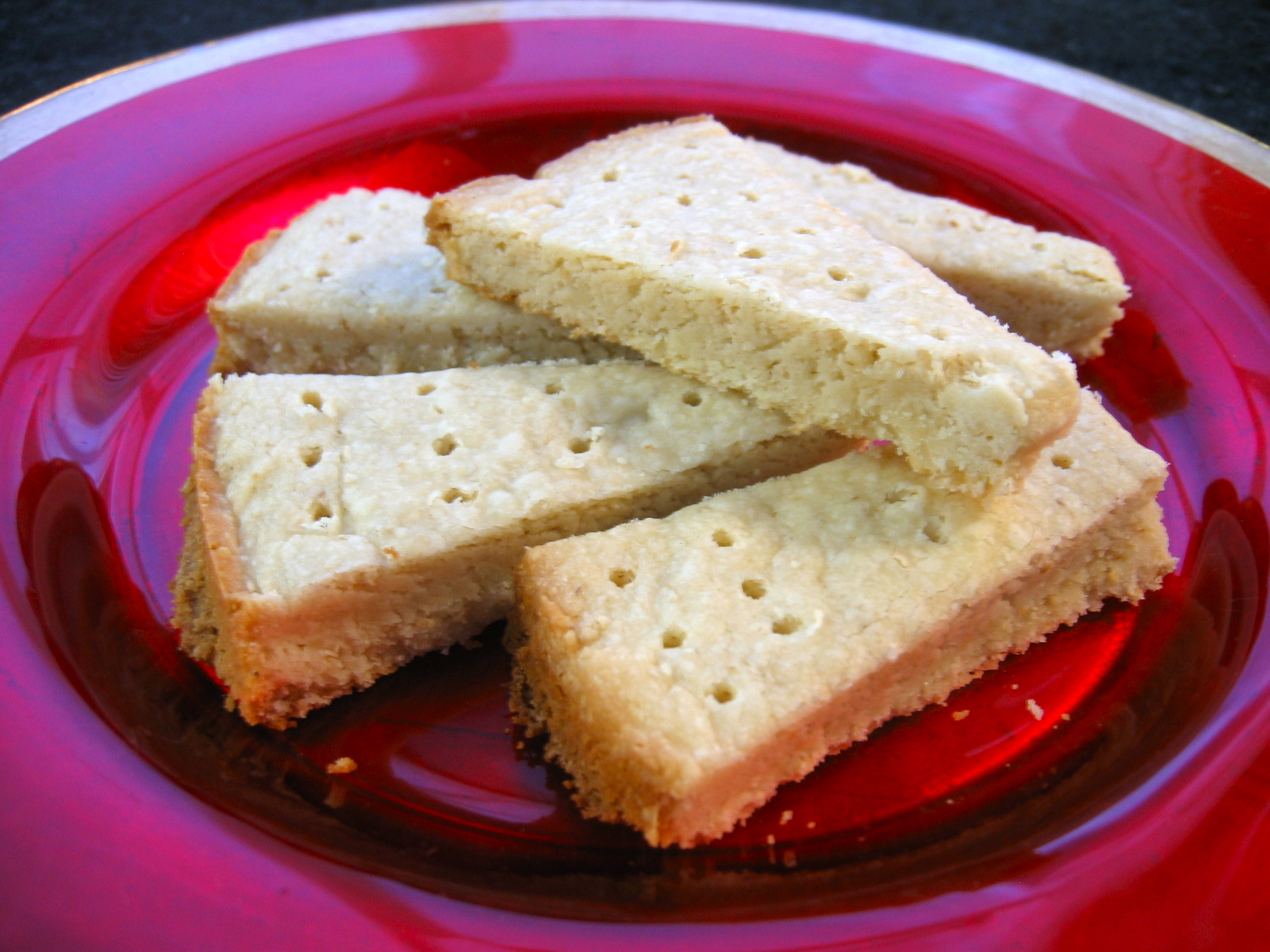
This shortbread has a lovely texture and it’s not too sweet. I hope you enjoy it. To avoid additives and preservatives, be sure to use a butter that does not contain colour.

This shortbread has a nice crumbly texture and isn't too sweet

Note:

Use the collar of a springform pan to form the shortbread into an even round. Mold the shortbread with the collar in the closed position, then open the collar, but leave it in place. This allows the shortbread to expand slightly but keeps it from spreading too far. Wrapped well and stored at room temperature, shortbread will keep for up to 7 days.

Ingredients:

½ cup old-fashioned rolled oats

1 ½ cups (7.5 oz) unbleached all-purpose flour

¼ cup cornstarch

2/3 cup confectioners’ sugar (also known as icing sugar)

½ tsp table salt

14 tbsp unsalted butter, cold, cut into 1/8-inch slices

Special equipment:

Stand mixer

Springform pan (9 or 9.5 inch)

2-inch oven-proof cookie or biscuit cutter

Preparation:

Adjust oven rack to middle position and heat oven to 450 degrees. Pulse oats in spice grinder or blender until reduced to fine powder, about ten 5-second pulses (you should have ¼ to 1/3 cup oat flour). In bowl of stand mixer fitted with paddle attachment, mix oat flour, all-purpose flour, cornstarch, sugar, and salt on low speed until combined, about 5 seconds. Add butter to dry ingredients and continue to mix on low speed until dough just forms and pulls away from sides of bowl, 5 to 10 minutes.

Place upside-down (grooved edge should be at top) collar of 9- or 9 1/2-inch springform pan on parchment-lined rimmed baking sheet (do not use springform pan bottom). Press dough into collar in even 1/2-inch-thick layer, smoothing top of dough with back of spoon. Place 2-inch biscuit cutter in center of dough and cut out center. Place extracted round alongside springform collar on baking sheet and replace cutter in center of dough. Open springform collar, but leave it in place.

Bake shortbread 5 minutes, then reduce oven temperature to 250 degrees. Continue to bake until edges turn pale golden, 10 to 15 minutes longer. Remove baking sheet from oven; turn off oven. Remove springform pan collar; use chef’s knife to score surface of shortbread into 16 even wedges, cutting halfway through shortbread. Using wooden skewer, poke 8 to 10 holes in each wedge. Return shortbread to oven and prop door open with handle of wooden spoon, leaving 1-inch gap at top. Allow shortbread to dry in turned-off oven until pale golden in center (shortbread should be firm but giving to touch), about 1 hour.

Transfer baking sheet to wire rack; cool shortbread to room temperature, at least 2 hours. Cut shortbread at scored marks to separate and serve.

From the November 2009 issue of Cook’s Illustrated

If you are looking for a new twist on lamb chops, try this recipe from the November 2010 issue of Bon Appetit. Lamb chops (I used loin chops) are sauteed on top of the stove.

Lamb chops are sauteed

While the chops rest, quickly saute grape or cherry tomatoes in the same skillet.

Then saute cherry or grape tomatoes in the same skillet

The chops are then topped with the tomatoes, red onion slices, feta cheese and freshly chopped oregano. I served the chops with roasted fingerling potatoes and a chiffonade of Brussels sprouts.

Lamb chops with red onion, grape tomatoes and feta, served with fingerling potatoes and chiffonade of Brussels sprouts

To avoid additives and preservatives in this recipe, be sure to use fresh lemon juice, because lemon juice concentrates contain sodium benzoate. Also check the ingredients of the feta cheese to ensure it is additive-free.

Ingredients:

½ cup plus 2 tablespoons extra-virgin olive oil
¼ cup red wine vinegar
2 tablespoons fresh lemon juice
3 garlic cloves, minced
3 tablespoons chopped fresh oregano, divided
¾ teaspoon ground cumin
4 lamb shoulder blade chops (each ½ to ¾ inch thick)
1 10- to 12-ounce container grape tomatoes
½ cup coarsely crumbled feta cheese
½ cup paper-thin red onion slices

Preparation:

Whisk ½ cup olive oil, red wine vinegar, lemon juice, minced garlic, 2 tablespoons oregano, and ground cumin in medium bowl; season to taste with salt and pepper. Transfer ½ cup dressing to large bowl; add lamb chops and stir to coat. Let marinate 30 minutes, stirring occasionally. Add grape tomatoes to remaining dressing in medium bowl; toss to coat.

Sprinkle lamb chops with salt and pepper. Heat remaining 2 tablespoons olive oil in heavy large skillet over medium-high heat. Sauté lamb chops until browned on both sides and cooked to desired doneness, about 4 minutes per side for medium, depending on thickness. Transfer lamb chops to 4 plates (reserve skillet).

Using slotted spoon, transfer tomatoes to same skillet (reserve dressing from tomatoes in bowl). Sauté tomatoes until skins begin to wrinkle, about 2 minutes. Top lamb chops with tomatoes, then feta, red onion, and remaining 1 tablespoon oregano. Drizzle with reserved dressing. Serves 4.

From the November 2010 issue of Bon Appetit

Lagman is a lamb stir fry from Uyghur, a cuisine Lucy Waverman featured in the September 24, 2010 edition of The Globe and Mail. According to Waverman, Uyghur food originated in China’s Xingjian province (formerly East Turkistan) and is a fusion of East Asian techniques and ingredients with a significant Turkish influence. I had never made a stir fry using lamb, so thought I’d give it a try. It was excellent, with great flavour, texture and colour. Cut the meat off a lamb sirloin chop; you can also use beef or chicken if you prefer.

Slices of lamb are stir fried with vegetables

To avoid additives and preservatives in this recipe, use tamari instead of soy sauce. Tamari uses a natural preservative—alcohol—instead of sodium benzoate. I couldn’t find all-natural beef stock, so I used Imagine Organic Chicken Broth, which worked well.

Lagman served over noodles

Ingredients:

Sauce

2 heaped tablespoons tomato paste

2 tablespoons soy sauce

½ teaspoon dried chili flakes

½ teaspoon sugar

½ cup beef stock or water

1 star anise, broken up

Meat

3 tablespoons vegetable oil

12 ounces (375 grams) thinly sliced lamb

Salt and freshly ground pepper

1 tablespoon chopped garlic

1 tablespoon chopped ginger

1 cup sliced onion

½ red pepper, sliced

1 mild green banana pepper, sliced

1 cup thinly sliced carrot

2 cups diced tomato

3 cups sliced Napa cabbage

12 ounces (375 grams) udon noodles

¼ cup coriander sprigs

Preparation:

Combine all sauce ingredients in a bowl. Heat a wok over high heat until very hot. Add oil and gently swirl to coat. Season lamb with salt and pepper and add to pan along with garlic and ginger and stir fry for 1 minute or until beginning to brown. Add onion, red pepper, banana pepper and carrots and stir fry until vegetables soften (about 2 minutes). Add tomato and cabbage and stir fry for 2 minutes or until cabbage has wilted. Stir in sauce, bring to boil and boil for about 2 minutes or until vegetables are crisp tender.

Bring a large pot of salted water to a boil over high heat. Add noodles and cook for 1 minute or until heated through. Drain and add to wok, stirring to combine with vegetables and sauce. Sprinkle with coriander sprigs. Serves 4.

From the September 24, 2010 edition of The Globe and Mail

I am very fortunate to have been asked by my friend Ivonne, who writes the terrific Cream Puffs in Venice blog (www.creampuffsinvenice.ca)  to review cookbooks for the Daring Kitchen website. My review of  Ad Hoc at Home, by celebrity chef Thomas Keller is now posted there.

Ad Hoc at Home is a beautiful book, and it contains many useful tips. The recipes are complex, however, so be ready to invest some time and effort. To read my full review, visit www.thedaringkitchen.com.

Here are photos of the recipes I made from Ad Hoc at Home. The recipes for Rainbow Chard with Raisins, Pine Nuts and Serrano Ham and for Porterhouse Steak with Herb-Shallot Butter are already posted on this blog. If you are interested in the recipes for the other dishes, please let me know.

Buttermilk fried chicken

Rainbow chard with raisins, pine nuts and Serrano ham

Porterhouse steak

Red potato and green bean salad with creamy pepper dressing

Corn on the cob with lime salt

Pork tenderloin always makes a tasty weeknight meal, and this recipe from the December 1997 issue of Bon Appetit makes it a quick one as well. The pork tenderloin is sliced and then pounded into thin medallions.

Slice the pork thinly and then pound it into medallions

The medallions cook very quickly in the pan; make sure your pan is hot and don’t overcrowd it. Otherwise, the medallions will steam instead of browning.

The medallions cook quickly and stay tender

Once the pork is cooked, remove it to a plate. Then use the delicious fond on the bottom of the pan to make a quick mustard caper-sauce. Return the pork to the sauce to heat through and you have supper on the table in about 15 minutes.

The medallions are served with a tasty mustard-caper sauce

To avoid additives and preservatives in this recipe, use butter that does not contain colour, all-natural chicken stock and capers and mustard that are additive-free.

Ingredients:

1 8- to 10-ounce pork tenderloin, cut crosswise into 1/2-inch-thick rounds
1 tablespoon butter
1/4 cup sliced shallots
1 cup canned low-salt chicken broth
2 tablespoons whipping cream
1 1/2 tablespoons drained capers
1 tablespoon coarse-grained Dijon mustard

Preparation:

Using meat mallet or rolling pin, flatten pork rounds slightly to scant 1/2-inch thickness. This is easier to do if you cover the pork with plastic wrap first. Sprinkle the pork with salt and pepper.
Melt butter in heavy large skillet over medium-high heat. Add pork to skillet and saute until brown and cooked through, about 2 minutes per side. Transfer pork to plate. Add shallots to skillet and stir 1 minute. Add chicken broth and cream. Boil until sauce is thick enough to coat spoon, stirring up browned bits, about 3 minutes. Mix in capers and mustard. Return pork to sauce. Simmer mixture until pork is heated through, about 1 minutes. Season to taste with salt and pepper and serve.

From the December 1997 issue of Bon Appetit

« Previous PageNext Page »