This simple but delicious butter sauce from New York Times Cooking can be used for any kind of fish and would also work with shrimp or chicken breasts. Melt butter and oil in an oven-proof pan and add garlic, sliced olives and fennel or coriander seeds. Cook for a few minutes and then add the fish to the pan, off-heat. Spoon some of the sauce over the fish and then bake until the fish is just cooked through, 10-15 minutes. Squeeze some fresh lime juice over the fish and serve with more sauce, garnished with fresh herbs. I used cod, green olives and cilantro.

Avoiding Additives and Preservatives

Use butter that contains only cream, with no colour added. Check the olives to make sure the oil or brine they are packed in does not contain preservatives or colour.

Sizzle the olives in melted butter

Spoon the olives and butter over the fish

Bake the fish until just cooked through

Fish with sizzling olive butter

Ingredients:

¼ cup (60 ml) unsalted butter

1 tablespoon (14 ml) extra-virgin olive oil

1 cup (250 ml) mixed olives, such as Kalamata, Castelvetrano, Moroccan or Picholine, pitted and sliced

2 garlic cloves, minced or finely grated

½ teaspoon (2.5 ml) fennel or coriander seeds, coarsely crushed (use the flat side of your knife or a mortar and pestle)

4 (1-inch-thick/2.54-cm) pieces flaky white fish fillet, such as cod (about 6 ounces/170 g each), patted dry

Kosher salt and freshly ground black pepper

2 lime wedges, plus more for serving

¼ cup (60 ml) chopped cilantro or parsley, leaves and tender stems

¼ cup (60 ml) chopped dill, leaves and tender stems

Preparation:

Heat oven to 350 degrees F (176 C). Heat a large, oven-safe skillet over medium. Add butter and oil, and cook until butter melts and starts to sizzle, 1 to 2 minutes. Stir in olives, garlic and fennel or coriander, and cook until fragrant, 1 to 2 minutes.

Season fish fillets with salt and pepper, then nestle them in one layer in the skillet. Carefully spoon some of the butter mixture over the fish, basting the fillets, then transfer pan to the oven.

Bake until fish is opaque and flaky, 10 to 15 minutes, basting halfway through. Remove from oven and transfer fillets to serving plates.

Squeeze a wedge or two of lime into the butter mixture and spoon sauce over fish. Top with black pepper, cilantro and dill, with extra lime wedges on the side for squeezing. Serves 4.

From NYT Cooking

This hearty vegetarian salad from NYT Cooking combines savory, sweet and tart flavours. Toss cauliflower with hot pepper flakes, coriander, turmeric, salt and pepper and roast for about 25 minutes. While the cauliflower roasts, make the vinaigrette: a combination of shallot, raisins, preserved lemon, vinegar, honey, oil, salt and pepper. Brown the halloumi in a skillet. To serve, toss arugula with some vinaigrette and top with cauliflower, halloumi and avocado. Drizzle with more vinaigrette and sprinkle with parsley. Cook’s note: I used baby spinach instead of baby arugula. To make a quick version of home-made preserved lemon, use a vegetable peeler to remove five long strips of lemon zest from a lemon. Squeeze the lemon into a small bowl and add the zest. Stir in a ½ tsp (2.5 ml) salt and ½ tsp (2.5 ml) sugar and let stand for about 30 minutes. Chop the zest finely and add back to the juice before using.

Avoiding Additives and Preservatives

Check the dried spices to make sure they don’t contain colour or anti-caking agents. Check the raisins for sulfites and the preserved lemon and halloumi for additives. I used Eden Organic red wine vinegar.

Roast the cauliflower

Sear the halloumi

Toss the greens with vinaigrette and top with cauliflower, halloumi, avocado, parsley and more vinaigrette

Ingredients:

1 large head cauliflower (about 2 pounds/900 g), cut into 1 ½ -inch (3.8-cm) wedges

½ cup (125 ml) olive oil

½ teaspoon (2.5 ml)  red-pepper flakes

1 ½ teaspoons (7.5 ml) ground coriander

¾ teaspoon (3.75 ml) ground turmeric

Kosher salt and black pepper

1 small shallot, minced (about 1/3 cup/85 ml)

¼ cup (60 ml) golden raisins

1 large preserved lemon, seeded, halved, seeded, then very thinly sliced (about 3 tablespoons/45 ml)

1 tablespoon (15 ml) red wine vinegar

1 teaspoon (5 ml) honey

1 (8-ounce/226 g) block halloumi

6 ounces (170 g) baby arugula (about 8 packed cups/2 L)

1 large ripe avocado, halved, pitted and diced

1 cup torn fresh flat-leaf parsley leaves and tender sprigs

Preparation:

Heat oven to 425 degrees F (218 C) and set a large rimmed baking sheet on the middle rack.

In a large bowl, toss the cauliflower with 3 tablespoons (45 ml) olive oil, the hot pepper flakes, coriander, turmeric, 1 ½ (7.5 ml) teaspoons salt and 1 teaspoon (5 ml) pepper. Transfer to the hot baking sheet, spread in an even layer and roast until browned in spots and crisp-tender, tossing once halfway through, 20 to 25 minutes.

Meanwhile, prepare the vinaigrette: In a small bowl, stir together the shallot, raisins, preserved lemon, vinegar and honey with 3 tablespoons (45 ml) olive oil, ½ teaspoon (2.5 ml) salt and ¼  teaspoon (1.25 ml) pepper. Set aside.

Prepare the halloumi: Cut the halloumi into 3/4-inch (1.9-cm) cubes and pat dry using a kitchen towel or paper towels. Heat the remaining 2 tablespoons (30 ml) olive oil in a large cast-iron skillet over high. Add the halloumi cubes and cook, stirring frequently, until browned, 2 to 3 minutes. (You’ll want to be fairly attentive, flipping frequently, as you want to make sure the cubes toast without burning or melting.) Transfer to a paper towel-lined plate and season with pepper.

Toss the arugula with half the vinaigrette until lightly coated and divide among plates or shallow bowls. Top with the cauliflower, halloumi and avocado. Drizzle with the remaining vinaigrette, sprinkle with parsley and serve immediately. Serves 4.

From New York Times Cooking

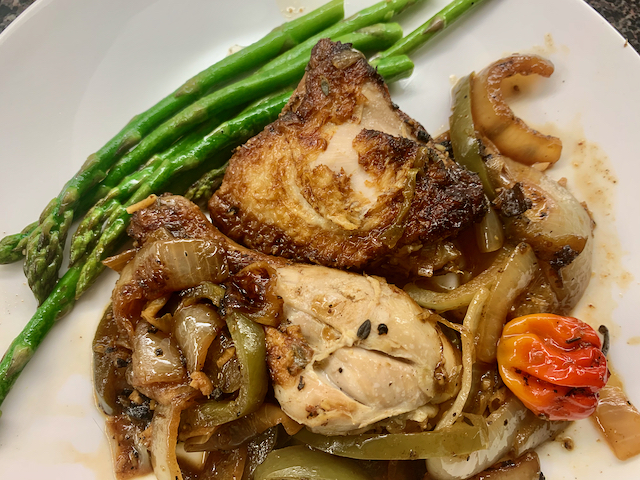
This fabulous recipe from New York Times Cooking, is quick, easy and creates a deeply flavoured moist chicken dish. Marinate the chicken in fresh tarragon, garlic, oil, salt and pepper. Toss onions will oil and spread out on a baking sheet. Add the marinated chicken and fresh herbs. Roast for about 35 minutes, drizzle with vinegar and serve. Cook’s note: I didn’t use vinegar. I also added some asparagus to the sheet pan for the last 15 minutes of cooking.

Avoiding Additives and Preservatives

The ingredients in this recipe are additive-free, except for the sherry vinegar. Either omit or use a wine vinegar with only naturally occurring sulfites.

Place marinated chicken, onion and herbs on baking sheet

Roast until chicken is done

Sheet-Pan Tarragon Chicken with Onions

Ingredients:

½ cup (125 ml) finely chopped tarragon (leaves and tender stems), plus 4 whole sprigs

2 garlic cloves, finely grated or minced

2 tablespoons (30 ml) extra-virgin olive oil, more for drizzling

1 ½ teaspoons (7.5 ml) kosher salt, more as needed

½ teaspoon (5 ml) ground black pepper, more as needed

3 pounds (1.36 kg) bone-in chicken thighs (skin on)

2 large onions, peeled and sliced (about 4 cups/1 L)

4 thyme sprigs

Sherry vinegar, to taste

Preparation:

In a large bowl, stir together tarragon, garlic, oil, salt and pepper. Add chicken thighs and toss to coat. Cover with plastic wrap and chill for at least six hours, and up to overnight.

Heat oven to 425 degrees F (218 C). Spread onions out on a rimmed baking sheet, drizzle with oil and sprinkle with salt and pepper and toss well. Clear spaces on the baking pan, then place chicken pieces in the cleared spaces so the onions surround the chicken. Strew thyme and tarragon sprigs over onions and chicken.

Roast, tossing the onions after 15 minutes, until chicken is cooked through and the onions tender, 25 to 35 minutes. If the chicken skin or onions are not as brown as you’d like, run pan under the broiler for 1 to 2 minutes at the end of cooking.

Place chicken on a platter. Drizzle onions with sherry vinegar and more salt and pepper if needed. Spoon onions around the chicken and serve. Serves 6.

From the New York Times

This recipe from Bowls, by America’s Test Kitchen, is a quick and easy take on Pad Thai. Sauté shrimp and set aside. Whisk lime juice, water, sugar, fish sauce, oil, vinegar and cayenne together and set aside. Soak rice noodles in boiling water until tender. Cook garlic and shallot, add egg and scramble it. Add the noodles, lime mixture, scallions and cook for a few minutes. Put noodle mixture in bowls, top with shrimp, scallions and bean sprouts and other garnishes and serve. Cook’s note: I omitted the bean sprouts and used parsley instead of cilantro for a garnish.

Avoiding Additives and Preservatives

Use freshly squeezed lime juice. I used Cock brand fish sauce and Marukan rice vinegar, which are additive-free. Check the cayenne to make sure it does not contain colour or anti-caking agents.

Sauté the shrimp and set aside

Add noodles to shallot, garlic and egg

Shrimp Pad Thai Bowl

Ingredients:

3 tbsp (45 ml) lime juice

2 ½ tbsp (37.5 ml) packed dark brown sugar

2 tbsp (30 ml) fish sauce

2 ½ tbsp (37.5 ml) vegetable oil, divided

2 tsp (10 ml) rice vinegar

1/8 tsp (0.6 ml) cayenne pepper

4 oz (113 g) ¼-inch- (0.6-cm-) wide rice noodles

1 small shallot, minced

1 garlic clove, minced

Pinch table salt

1 large egg, lightly beaten

2 scallions, green parts only, sliced thin, divided

12 oz (340 g) sautéed shrimp, warmed

1 cup (250 ml) bean sprouts

Peanuts (optional)

Chopped cilantro (optional)

Preparation:

To sauté shrimp, pat 12 oz. (340 g) peeled and deveined shrimp dry with paper towels and sprinkle with salt and pepper. Heat 1 tbsp (15 ml) vegetable oil in a non-stick skillet over medium-high heat until just smoking. Add shrimp in a single layer and cook for 1 minute without stirring. Flip shrimp and cook until opaque, about another minute. Keep warm while you prepare the rest of the recipe.

Whisk lime juice, 3 tbsp (45 ml) water, sugar, fish sauce, 1½ tbsp (22.5 ml) oil, vinegar and cayenne together in bowl; set aside. Pour 2 quarts (2 L) boiling water over noodles in bowl and stir to separate. Let noodles soak until soft and pliable but not fully tender, stirring once halfway through soaking, 8-10 minutes. Drain noodles and rinse with cold water until water runs clear, shaking to remove excess water.

Heat remaining tablespoon (15 ml) of oil in 10-inch (25-cm) non-stick skillet over medium-high heat until shimmering. Add shallot, garlic and salt and cook over medium heat, stirring constantly, until shallot is light golden brown, about 1½ minutes. Stir in egg and cook, stirring vigorously until scrambled and barely moist, about 20 seconds.

Add drained rice noodles and toss to combine. Add lime mixture and half of scallions, increase heat to medium-high and cook, tossing gently, until noodles are well coated and tender, about 3 minutes. If not yet tender, add 2 tbsp (30 ml) water to skillet and continue to cook until tender. Season with salt and pepper to taste. Divide among individual serving bowls, then top with shrimp and bean sprouts and sprinkle with remaining scallions. For extra crunch and flavour, sprinkle with chopped peanuts and minced cilantro. Serves 2.

From Bowls by America’s Test Kitchen

This recipe from Ina Garten’s latest cookbook, Modern Comfort Food, would be perfect for a casual dinner party. Dredge skin-on, boneless chicken breasts in flour and pan-fry briefly before cooking them for 10 minutes in the oven. Return the pan to the stovetop, add butter and cook until the chicken is done. Serve with lemon orzo with feta cheese. Cook’s note: I did not use dill for the orzo.

Avoiding Additives and Preservatives

Use butter that contains only cream and fresh lemon juice. Tre Stelle feta is additive-free.

Finish cooking the chicken in butter after removing from the oven

Crispy chicken with lemon orzo

Ingredients:

Crispy chicken

2/3 cup (165 ml) all-purpose flour

Kosher salt and freshly ground black pepper

4 boneless chicken breasts, skin-on (about 8 ounces/226 g each)

¼ cup (60 ml) canola oil

9 tablespoons (136 ml) unsalted butter, divided

2 tablespoons (30 ml) minced fresh parsley

1 lemon, cut into 8 wedges

Lemon orzo with feta

Kosher salt and freshly ground black pepper

1 cup (250 ml) orzo

2 teaspoons (10 ml) grated lemon zest

2 tablespoons (30 ml) freshly squeezed lemon juice

2 tablespoons (30 ml) good olive oil

1 tablespoon (15 ml) minced fresh dill

1 cup (250 ml) small-diced feta, preferably Greek (4 ounces/113 g)

Preparation:

Lemon orzo with feta

In a large saucepan, bring 2 quarts (2 L) of water to a boil. Add 2 teaspoons (10 ml) salt and the orzo. Return the water to a boil and simmer uncovered for 9 to 11 minutes, until the orzo is al dente. Drain.

Transfer the orzo to a bowl and stir in the lemon zest, lemon juice, olive oil, dill, 2 teaspoons (10 ml) salt, and 1 teaspoon (5 ml) pepper. Fold in the feta and serve hot.

Crispy chicken

Heat the oven to 450°F (232°C).

Combine the flour, 2 teaspoons (10 ml) salt, and 1 teaspoon (5 ml) pepper in a shallow bowl. Remove the tenders on the underside of the chicken breasts and save for another use. (This makes the chicken breasts an even thickness so they cook evenly.) Heat the canola oil and 4 tablespoons (60 ml) of the butter together in a large (12-inch/30-cm) cast-iron skillet over medium heat until the butter has melted and begins to sizzle.

Dredge the chicken in the flour mixture and shake off any excess. Place the chicken, skin side down, in the skillet and cook over medium heat without moving for 12 minutes. With the chicken still skin side down, place the skillet in the oven and roast for 10 minutes. Return the skillet to the stovetop over medium heat (careful; the handle will be hot!). Turn the chicken skin side up, add the remaining 5 tablespoons (75 ml) of butter, and continue cooking for 3 to 5 minutes, until the butter is a nutty brown color and the chicken breasts are just cooked through. Off the heat, sprinkle on the parsley.

Divide the lemon orzo with feta among four dinner plates. Transfer the chicken to a cutting board and slice each breast crosswise in thick slices. Arrange one breast on each plate with the orzo. Spoon a few tablespoons of the brown butter over each chicken breast, squeeze on some lemon, and sprinkle with salt. Serve hot with a fresh wedge of lemon on each plate. Serves 4.

From Modern Comfort Food by Ina Garten

This pasta dish from Alison Roman is absolutely delicious. Caramelize shallots and garlic, add hot pepper flakes, anchovies, tomato paste and cook for another few minutes. Set half of the sauce aside in the fridge or freezer for future use. Cook the pasta and add to the remaining sauce with some of the pasta cooking water. Cook until the sauce is thickened a bit and coats the pasta. Garnish with a mixture of chopped parsley, garlic, salt and pepper. Cook’s note: I know this looks like a lot of anchovies, but they add an incredible depth of flavour and the final dish does not taste like anchovies at all.

Avoiding Additives and Preservatives

Check the hot pepper flakes to make sure they don’t contain colour or anti-caking agents. I used Unico anchovies and No Name tomato paste.

Caramelized shallot pasta

Ingredients:

¼ cup (60 ml) olive oil

6 large shallots, very thinly sliced

5 garlic cloves, 4 thinly sliced, 1 finely chopped

Kosher salt and freshly ground black pepper

1 teaspoon(5 ml) red-pepper flakes, plus more to taste

1 2-ounce (57 g) can anchovy fillets (about 12), drained

1 4.5-ounce (128-g) tube or 6-ounce (170-g) can of tomato paste, about ½ to ¾ cup (125 to 187 ml)

10 ounces (285 g) pasta

1 cup (250 ml) parsley, leaves and tender stems, finely chopped

Flaky sea salt

Preparation:

Heat olive oil in a large heavy-bottomed Dutch oven over medium high. Add shallots and thinly sliced garlic, and season with salt and pepper. Cook, stirring occasionally, until the shallots have become totally softened and caramelized with golden-brown fried edges, 15 to 20 minutes.

Add red-pepper flakes and anchovies. (No need to chop the anchovies; they will dissolve on their own.) Stir to melt the anchovies into the shallots, about 2 minutes.

Add tomato paste and season with salt and pepper. Cook, stirring constantly to prevent any scorching, until the tomato paste has started to cook in the oil a bit, caramelizing at the edges and going from bright red to a deeper brick red color, about 2 minutes. Remove from heat and transfer about half the mixture to a resealable container, leaving the rest behind. (These are your leftovers to be used elsewhere: in another batch of pasta or smeared onto roasted vegetables, spooned over fried eggs or spread underneath crispy chicken thighs.)

To serve, cook pasta according to package instructions in a large pot of salted boiling water until very al dente (perhaps more al dente than usual). Transfer to Dutch oven with remaining shallot mixture (or a skillet if you are using the leftover portion) and 1 cup pasta water. Cook over medium-high heat, swirling the skillet to coat each piece of pasta, using a wooden spoon or spatula to scrape up any bits on the bottom, until pasta is thick and sauce has reduced and is sticky, but not saucy, 3 to 5 minutes.

In a small bowl, combine parsley and finely chopped garlic clove, and season with flaky salt and pepper. Divide pasta among bowls, or transfer to one large serving bowl, and top with parsley mixture and a bit more red-pepper flakes, if you like. Serves 4.

From Alison Roman

This tasty dish combines spicy Chorizo and corn with cilantro-lime rice, topped with lime crema and a fresh tomato-avocado salsa. Cook’s note: I used finely chopped cooked and dried Chorizo instead of fresh Chorizo sausage and it worked well. Cook the dried Chorizo for the same amount of time as the fresh, to ensure it is crispy and heated through.

Avoiding Additives and Preservatives

I used President’s Choice Chorizo, which is additive-free and No Name sour cream. Check the dried spices for colour or anti-caking agents.

Brown the Chorizo and corn

Make the pico de gallo

Make the lime crema

Add the scallions, cilantro and lime zest to cooked rice

Place rice in bowl, top with Chorizo and corn mixture and top with pico de gallo and lime crema

Ingredients:

9 oz (250 g) Chorizo sausage, uncased

Olive or canola oil

2 tsp (10 ml) garlic, minced

¾ cup (180 ml) Basmati rice

2 tbsp (30 ml) cilantro, finely chopped

6 tbsp (90 ml) sour cream

Lime, zested and juiced

4 oz (113 g) grape or cherry tomatoes, halved

Avocado, pitted, peeled and cut into bite-sized pieces

1 tbsp (15 ml) Mexican seasoning (see recipe below)

2 green onions, thinly sliced, keeping white and green parts separate

4 oz (113 g) corn kernels

Salt

Mexican seasoning

1 teaspoon (5 ml) chili powder (add more if you like)

1 teaspoon (5 ml) garlic powder

1 teaspoon (5 ml) onion powder 1/2 teaspoon crushed red pepper flakes

½ teaspoon (2.5 ml) dried oregano

2 teaspoons (10 ml) paprika

1 ½ teaspoons (7.5 ml) ground cumin

½ teaspoon (2.5 ml) sea salt

½ teaspoon (2.5 ml) black pepper

1 pinch ground cinnamon

1 pinch ground cloves

Mix together ingredients thoroughly in a bowl and store in a cool place in an airtight container.

Preparation:

Add 1 ¼ cups (315 ml) water to a medium pot. Cover and bring to a boil over high heat. Add rice to the pot of boiling water. Reduce the heat to low. Cook, still covered, until rice is tender and liquid is absorbed, 12-14 minutes.

While rice cooks, heat a large non-stick pan over medium-high heat. When hot, add ½ tbsp (7.5 ml) oil, then chorizo. Cook, breaking up chorizo into smaller pieces, until golden-brown and cooked through, 6-7 minutes.

Add corn to the pan with chorizo. Cook, stirring occasionally, until golden-brown, 2-3 minutes.

Reduce heat to medium. Add Mexican seasoning, garlic and 2 tbsp (30 ml) water. Cook, stirring together, until fragrant, 1-2 minutes.

When rice is done, fluff with a fork and stir in the white parts of the green onions, half the lime zest and half the cilantro. Season with salt.

To make the lime crema, mix sour cream, half the lime juice and remaining lime zest in a small bowl.

To make the pico de gallo, mix tomatoes, avocado, remaining green onions, remaining cilantro and remaining lime juice in a medium bowl. Season with salt and pepper.

Divide rice between bowls and top with chorizo mixture and pico de gallo. Dollop over lime crema. Serves 2.

Adapted from HelloFresh

This recipe from Ina Garten consistently wins online debates about the best lasagne recipe. It does so for a couple of reasons: first, it uses turkey sausage, which makes for a lighter dish and second, you soak the noodles in hot water, avoiding the need to boil them. This recipe takes a while to make and assemble, but the results are excellent. Cook’s note: I couldn’t find turkey sausage, so I used a hot Italian pork sausage and it worked well. I also used cream cheese instead of goat cheese.

Avoiding Additives and Preservatives

Look for an all-natural sausage, such as Free From brand. I used Unico tomatoes, No Name tomato paste, Tre Stelle ricotta, Arla organic cream cheese and No Name mozzarella. Genuine Parmesan (look for the name on the rind) is always additive-free.

Brown the onion and sausage

Add tomatoes, tomato paste, herbs and spices and simmer until thickened

The sauce layer

The pasta layer

Mozzarella and ricotta layers

Top with sauce and Parmesan and bake for 30 minutes

The lasagne is done when the sauce is bubbling and the top has browned

Ina Garten's turkey lasagne

Ingredients:

2 tablespoons (30 ml) olive oil

1 cup (250 ml) chopped yellow onion (1 onion)

2 garlic cloves, minced

1 ½ pounds (680 g) sweet Italian turkey sausage, casings removed

One 28-ounce (793 g) can crushed tomatoes in tomato puree

One 6-ounce (170 g) can tomato paste

¼ cup (60 ml) chopped fresh flat-leaf parsley, divided

½ cup (125 ml) chopped fresh basil leaves

2 teaspoons (10 ml) kosher salt

¾ teaspoon (3.75 ml) freshly ground black pepper

½ pound (226 g) lasagna noodles

15 ounces (425 g) ricotta cheese

3 to 4 ounces (85 to 113 g) creamy goat cheese, crumbled

1 cup (250 g) grated Parmesan, plus ¼ (60 ml) cup for sprinkling

1 extra-large egg, lightly beaten

1 pound (454 g) fresh mozzarella, thinly sliced

Preparation:

Preheat the oven to 400 degrees F (204 C).

Heat the olive oil in a large (10- to 12-inch/25- to 30-cm) skillet. Add the onion and cook for 5 minutes over medium-low heat, until translucent. Add the garlic and cook for 1 more minute. Add the sausage and cook over medium-low heat, breaking it up with a fork, for 8 to 10 minutes, or until no longer pink. Add the tomatoes, tomato paste, 2 tablespoons (30 ml) of the parsley, the basil, 1 ½ teaspoons (7.5 ml) of the salt, and ½ teaspoon (2.5 ml) pepper. Simmer, uncovered, over medium-low heat, for 15 to 20 minutes, until thickened.

Meanwhile, fill a large bowl with the hottest tap water. Add the noodles and allow them to sit in the water for 20 minutes. Drain.

In a medium bowl, combine the ricotta, goat cheese, 1 cup (250 ml) of Parmesan, the egg, the remaining 2 tablespoons (30 ml) of parsley, remaining ½ teaspoon (2.5 ml) salt, and ¼ teaspoon (1.25 ml) pepper. Set aside.

Ladle 1/3 of the sauce into a 9- by 12- by 2-inch (22- by 30- by 5-cm) rectangular baking dish, spreading the sauce over the bottom of the dish. Then add the layers as follows: half the pasta, half the mozzarella, half the ricotta, and one 1/3 of the sauce. Add the rest of the pasta, mozzarella, ricotta, and finally, sauce. Sprinkle with ¼ cup (60 ml) of Parmesan. Bake for 30 minutes, until the sauce is bubbling. Serves 8.

From Ina Garten

If you are looking for something different for dinner on New Year’s Eve or New Year’s Day, consider this whole roasted sea bass from Simple by Yotam Ottolenghi. Make a quick sauce and spread cabbage leaves and scallions on a baking sheet. Place the fish on top and sprinkle with ginger. Cover with foil and roast for about 40 minutes. Sprinkle scallions and chili pepper over the fish, pour hot oil over to crisp the skin and serve with the vegetables and sauce.

Avoiding Additives and Preservatives

I use Imagine Organic chicken stock, tamari instead of soy sauce, Foreman pure sesame oil and Mitsukan mirin rice wine.

Make the sauce

Spread red cabbage leaves and scallions on a baking sheet

Place fish on baking sheet and sprinkle with ginger

Roast fish and then top with hot oil, scallions and chili pepper

Serve with the sauce and garnish with cilantro

Ingredients:

For the sauce

7 tbsp (100 ml) chicken stock

2 tbsp (30 ml) sesame oil

2 tbsp (30 ml) Shaoxing rice wine (or dry sherry instead)

3½ tbsp (52.5 ml) light soy sauce

1 tbsp (15 ml) sugar

For the fish

1 whole sea bass (about 2 lbs/1 kg and 18 inches/45 cm long), scaled, gutted and rinsed

Coarse sea salt

10 scallions, trimmed

1 small medium white cabbage, cut in half, core cut out, and leaves separated one by one

1 ½ -inch (3.5 cm) piece fresh ginger, peeled and julienned

1 red chili deseeded and julienned

5 tbsp (75 ml) canola or peanut oil

½ cup (10 g) coriander leaves

Preparation:

Preheat the oven to 425 F (218 C)

Put all the sauce ingredients in a small pan, put on a high heat and, once boiling, cook for a minute, swirling the pan slightly so the sugar dissolves. Remove from the heat and set aside.

Cut five ¼-inch (0.5 cm) deep and 3 ¼-inch (8-cm) long diagonal slits on both sides of the fish. Sprinkle a teaspoon (5 ml) of salt evenly over one side of the fish and rub in; repeat on the other side with another teaspoon (5 ml) of salt.

Cut eight of the scallions into 2-inch (5-cm) lengths and set aside in a small bowl; finely slice the remaining two onions and set those aside in a separate bowl.

Line a large, high-sided 12-inch x 15-inch (30-cm x 40-cm) baking tray with baking parchment and spread the cabbage and larger scallion pieces on top. Lay the fish diagonally in the tray (this helps give it a bit of extra room), then sprinkle over the ginger. Pour the sauce over the fish and cover the tray tightly with foil.

Roast for 40 minutes, basting twice, until the fish is cooked through. To make sure it’s done, gently insert a knife into one of the slits and check that the flesh comes away from the bones and is no longer transparent. Sprinkle over the reserved finely sliced scallions and the chili, and set aside.

Pour the oil into a small pan and place on a high heat for about two minutes, until it starts to smoke. Very carefully pour this evenly over the fish, so that it starts to crisp the skin and vegetables.

You can serve the fish at the table in its baking tray, or arrange the cabbage leaves and chunks of scallions on a larger platter – you’ll need to pull them out from under the fish – and carefully lift out the fish to sit on top. Pour over the cooking sauce and serve at once, with coriander scattered on top. Serves 4.

From Simple by Yotam Ottolenghi

If you are craving some lighter fare during the holiday season, try this recipe from Dinner Uncomplicated by Claire Tansey. Make a quick sauce, bake the salmon and boil the edamame and noodles. Top the noodles with sauce, salmon, edamame, more sauce and sesame seeds.

Avoiding Additives and Preservatives

Use tamari instead of soy sauce and check the sesame oil and ramen noodles for additives. I use Marukan rice vinegar.

Scallion-ginger salmon noodles

Ingredients:

¼ cup (60 ml) canola oil

3 tbsp (45 ml) chopped fresh ginger

3 cloves garlic, minced

¾ cup (180 ml) sliced scallions

2 tbsp (30 ml) soy sauce

1 tsp (5 ml) rice of white wine vinegar

½ tsp (2.5 ml) toasted sesame oil

1 lb (454 g) skinless salmon fillets

1/8 tsp (0.6 ml) salt

4 packages ramen noodles (discard seasoning packets)

1 cup (250 ml) shelled edamame

Sesame seeds

Preparation:

Preheat the oven to 425 F (218 C).

Heat the canola oil in  small pan over high. Once it’s very hot, add the ginger, garlic and scallions. Cook until fragrant, about 1 minute, then transfer to a bowl. Stir in the soy sauce, vinegar and sesame oil. Reserve.

Line a small rimmed baking sheet with foil. Place the salmon on the baking sheet and sprinkle with salt. Bake for about 15 minutes or until salmon is just cooked through. Remove from the oven and let it rest, covered, for about 5 minutes.

Cook the edamame boiling salted water until tender. Remove from the water and add the ramen noodles to the boiling water. Cook until the noodles are tender.

Divide the noodles and edamame among four bowls and toss each portion with a tablespoon (15 ml) of the sauce. Flake the salmon into large pieces and divide among the bowls. Drizzle with the remaining sauce and top with sesame seeds. Serves 4.

From Dinner Uncomplicated by Claire Tansey

« Previous PageNext Page »