This delicious combination of pork tenderloin with braised red cabbage and apple is from Lucy Waverman. The pork is sprinkled with spices and seared. The cabbage and apple are sautéed and then bathed in wine, vinegar, sugar and stock. Place the pork on top and simmer until the pork is done. While the pork rests, add more wine, vinegar and stock to the pan, reduce the sauce, and whisk in a little butter at the end.

Avoiding Additives and Preservatives

Check your spices for colour or anti-caking agents. I used a red wine from with a sulfite level of lower than 10 parts per million, Imagine organic chicken stock, butter containing only cream and a balsamic vinegar with only naturally occurring sulfites.

Rub spices into pork tenderloin

Place seared pork on sauteed red cabbage and apple

Reduce sauce while pork rests

Pork tenderloin with red cabbage

4 cups (1 L) red cabbage, thinly sliced

1 tsp (5 ml) ground fennel seeds

1 tsp (5 ml) ground coriander

Pinch cinnamon

1 lb. (500 g) pork tenderloin

Salt and freshly ground pepper

2 tbsp (30 ml) olive oil

1 apple, peeled and diced

½ cup (125 ml) red wine, divided in half

3 tbsp (45 ml) balsamic vinegar

1 tbsp (15 ml) brown sugar

Pinch red pepper flakes

1 cup plus ¼ cup (310 ml) chicken stock

1 tbsp (15 ml) butter

2 tsp (10 ml) fresh parsley, chopped

Preparation:

Bring a large pot of water to boil. Add cabbage and bring back to a boil. Boil 1 minute, drain and refresh the cabbage with cold water. Drain well and set aside.

Combine fennel, coriander and cinnamon. Sprinkle over pork tenderloin, and season with salt and pepper.

Heat oil over medium-high heat in a skillet large enough to hold pork, or cut the meat into large sections to fit into the pan. Add pork and sear on all sides until browned, about 2 minutes a side. Remove pork and add apple and cabbage.

Sauté until slightly softened, about 2 minutes. Add ¼ cup (60 ml) of wine, 2 tablespoons of balsamic vinegar and sugar and bring to a boil. Add pepper flakes and ¼ cup (60 ml) of stock and return pork to the pan, reduce heat to medium-low. Cover skillet and cook tenderloin for 10 to 15 minutes, or until a touch of pink is left in the centre.

Remove pork and cabbage from the pan. Let pork rest 5 minutes.

To make the sauce, add remaining vinegar, wine and stock to the pan. Reduce on high heat for 5 to 7 minutes, or until thickened. Whisk in butter to finish.

Slice pork and serve with the red cabbage and apple mixture. Drizzle with sauce and garnish with parsley. Serves 4.

From Lucy Waverman

This recipe from the January 2014 issue of Bon Appetit tastes as good as it looks. Salmon is tossed with fennel, orange and lemon slices, chili and dill and roasted at a low temperature for about 40 minutes. Cooked this way, the salmon is moist and tender, and the roasted citrus, fennel and chili are delicious on top. This recipe would also be good with cod or halibut.

Avoiding Additives and Preservatives

All of the ingredients in this recipe are fresh, so no need to worry about additives.

Place salmon in dish with citrus, fennel and dill

Slow roasting makes the salmon very moist

Slow-roasted salmon with fennel, citrus and chiles

Ingredients:

1 medium fennel bulb, thinly sliced

1 blood or navel orange, very thinly sliced, seeds removed

1 Meyer or regular lemon, very thinly sliced, seeds removed

1 red Fresno chile or jalapeño, with seeds, thinly sliced

4 sprigs dill, plus more for serving

Kosher salt and coarsely ground black pepper

1 2-lb. (907 g) skinless salmon fillet, preferably center-cut

¾ cup (375 ml) olive oil

Flaky sea salt (such as Maldon)

Preparation:

Preheat oven to 275° F (135° C). Toss fennel, orange slices, lemon slices, chile, and 4 dill sprigs in a shallow 3-qt. (2.8 L) baking dish; season with kosher salt and pepper. Season salmon with kosher salt and place on top of fennel mixture. Pour oil over.

Roast until salmon is just cooked through (the tip of a knife will slide through easily and flesh will be slightly opaque), 30–40 minutes for medium-rare.

Transfer salmon to a platter, breaking it into large pieces as you go. Spoon fennel mixture and oil from baking dish over; discard dill sprigs. Season with sea salt and pepper and top with fresh dill sprigs. Serves 6.

From the January 2014 issue of Bon Appetit

We have been eating soup more often this winter, and this recipe from the cover of the January 2014 issue of Bon Appetit is a keeper. Ground pork is mixed with garlic, ginger and spices and then browned. Add broth, simmer a few minutes, and then add greens, scallions, soy sauce and fish sauce. The recipe calls for mustard greens; I used kale. Be sure to taste the soup before adding salt, as the soy sauce and fish sauce are quite salty.

Avoiding Additives and Preservatives

Check your spices to make sure they don’t contain colour or anti-caking agents. I use Imagine brand all-natural stock, tamari and a fish sauce with no MSG such as Cock brand.

Ground pork is mixed with spices

Cook the rice noodles until they are tender, but not too soft

Add kale

Simmer until the kale is tender

Spicy pork and kale soup

Ingredients:

½ pound (250 g) ground pork

2 cloves garlic finely chopped

2 teaspoons (10 ml) finely grated peeled ginger

1 teaspoon (5 ml) Sichuan peppercorns, crushed

¾ teaspoon (3 ml) crushed red pepper flakes

½ teaspoon (2 ml) cumin seeds, coarsely chopped

1 tablespoon (15 ml) vegetable oil

Kosher salt and freshly ground black pepper

4 cups (1 L) low-sodium chicken broth

1 bunch mustard greens, torn, about 4 cups (1 L)

4 scallions, thinly sliced

2 tablespoons (30 ml) reduced-sodium soy sauce

1 teaspoon (5 ml) fish sauce (such as nam pla or nuoc nam)

8 oz. (250 g) wide rice noodles

Preparation:

Mix pork, garlic, ginger, Sichuan peppercorns, red pepper flakes, and cumin in a medium bowl. Heat oil in a large pot over medium heat. Add pork mixture; season with salt and pepper and cook, stirring and breaking up with a spoon, until browned and cooked through, 8–10 minutes.

Add broth and bring to a boil; reduce heat and simmer until flavors meld, 8–10 minutes. Add mustard greens, scallions, soy sauce, and fish sauce and cook, stirring occasionally, until greens are tender, 5–8 minutes; season with salt and black pepper.

Meanwhile, cook noodles according to package directions; drain.

Divide noodles among bowls and ladle soup over. Serves 4.

From the January 2014 issue of Bon Appetit

Quinoa is gluten-free grain that is very nutritious. However, it can be soggy and bland. This recipe from the January/February 2014 issue of Cook’s Illustrated solves both problems by toasting the uncooked quinoa to develop a nutty flavour, reducing the amount of liquid used to cook it, and flavouring the cooked grain with onion, fresh herbs and lemon juice. This is a great side dish with fish or chicken. You could also add some feta cheese to make it a vegetarian entree.

Avoiding Additives and Preservatives

Make sure your butter does not contain colour and that you use freshly squeezed lemon juice.

If your quinoa is not prewashed, rinse it and let it dry for 15 minutes

Toasting the quinoa brings out its nutty flavour

Flavour the quinoa with your favourite fresh herbs

Quinoa pilaf with herbs and lemon

Ingredients:

1 ½ cups (375 ml) prewashed quinoa (see note below if quinoa is not prewashed)

2 tablespoons (30 ml) unsalted butter, cut into 2 pieces

1 small onion, chopped fine

¾ teaspoon (3 ml) salt

1 ¾ cups (425 ml) water

3 tablespoons (45 ml) chopped fresh herbs, such as cilantro, parsley, chives, mint, and tarragon

1 tablespoon (15 ml) lemon juice

Preparation:

Note: If you buy unwashed quinoa, rinse the grains in a fine-mesh strainer, drain them, and then spread them on a rimmed baking sheet lined with a dish towel and let them dry for 15 minutes before proceeding with the recipe.

Toast quinoa in medium saucepan over medium-high heat, stirring frequently, until quinoa is very fragrant and makes continuous popping sound, 5 to 7 minutes. Transfer quinoa to bowl and set aside.

Return now-empty pan to medium-low heat and melt butter. Add onion and salt; cook, stirring frequently, until onion is softened and light golden, 5 to 7 minutes.

Increase heat to medium-high, stir in water and quinoa, and bring to simmer. Cover, reduce heat to low, and simmer until grains are just tender and liquid is absorbed, 18 to 20 minutes, stirring once halfway through cooking. Remove pan from heat and let sit, covered, for 10 minutes. Fluff quinoa with fork, stir in herbs and lemon juice, and serve. Serves 4-6.

From the January/February 2014 issue of Cook’s Illustrated

Norcia, which is in the mountains of southeastern Umbria, is famous for its delicious sausages. Pasta alla Norcina features savoury pork sausage and mushrooms in a light cream sauce. This version from Cook’s Illustrated calls for homemade sausage, which is surprisingly easy to make. I ground the pork myself, in a food processor, but you can buy pre-ground meat. This dish is absolutely delicious and is wonderful comfort food on a cold winter night.

Avoiding Additives and Preservatives

Grind your own nutmeg or make sure the pre-ground version does not contain colour or anti-caking agents. I used a white wine with a sulfite level below 10 parts per million (from Frogpond Farm), fresh lemon juice and a Pecorino Romano cheese that contains only pasteurized sheep’s milk, bacterial culture, salt and rennet.

Form sausage meat into a patty

Brown the sausage on each side

Chop sausage and soak in cream

Brown the mushrooms

Add the sausage and cream to the mushrooms

Pasta alla Norcina

Ingredients:

Kosher salt and pepper

¼ teaspoon (1 ml) baking soda

8 ounces (250 g) ground pork

3 garlic cloves, minced

1 ¼ teaspoons (6 ml) minced fresh rosemary

⅛ teaspoon (0.5 ml) ground nutmeg

8 ounces (250 g) cremini mushrooms, trimmed

7 teaspoons (35 ml) vegetable oil

¾ cup (175 ml) heavy cream

1 pound (500 g) orecchiette

½ cup (125 ml) dry white wine

1 ½ ounces (43 g) Pecorino Romano cheese, grated (¾ cup/175 ml)

3 tablespoons (45 ml) minced fresh parsley

1 tablespoon (15 ml) lemon juice

Preparation:

Grease large dinner plate with vegetable oil spray. Dissolve 1⅛ teaspoons (5.5 ml) salt and baking soda in 4 teaspoons (20 ml) water in medium bowl. Add pork and fold gently to combine; let stand for 10 minutes.

Add 1 teaspoon (5 ml) garlic, ¾ teaspoon (3 ml) rosemary, nutmeg, and ¾ teaspoon (3 ml) pepper to pork and smear with rubber spatula until well combined and tacky, 10 to 15 seconds. Transfer pork mixture to greased plate and form into rough 6-inch (15.2 cm) patty. Pulse mushrooms in food processor until finely chopped, 10 to 12 pulses.

Heat 2 teaspoons (10 ml) oil in 12-inch (30.5 cm) skillet over medium-high heat until just smoking. Add patty and cook without moving it until bottom is browned, 2 to 3 minutes. Flip patty and continue to cook until second side is well browned, 2 to 3 minutes longer (very center of patty will be raw). Remove pan from heat, transfer sausage to cutting board, and chop into ⅛- to ¼ -inch (0.32 cm to 0.64 cm) pieces. Transfer sausage to bowl and add cream; set aside.

Bring 4 quarts (3.8 L) water to boil in large Dutch oven. Add pasta and 2 tablespoons (30 ml) salt and cook, stirring often, until al dente. Reserve 1 ½ cups (375 ml) cooking water, then drain pasta and return it to pot.

While pasta cooks, return now-empty skillet to medium heat. Add 1 tablespoon (15 ml) oil, mushrooms, and ⅛ teaspoon (0.5 ml) salt; cook, stirring frequently, until mushrooms are browned, 5 to 7 minutes. Stir in remaining 2 teaspoons (10 ml) oil, remaining garlic, remaining ½ teaspoon (2 ml) rosemary, and ½ teaspoon (2 ml) pepper; cook until fragrant, about 30 seconds. Stir in wine, scraping up any browned bits, and cook until completely evaporated, 1 to 2 minutes. Stir in sausage-cream mixture and ¾ cup (175 ml) reserved cooking water and simmer until meat is no longer pink, 1 to 3 minutes. Remove pan from heat and stir in Pecorino until smooth.

Add sauce, parsley, and lemon juice to pasta and toss well to coat. Before serving, adjust consistency with remaining reserved cooking water as needed and season with salt and pepper to taste. Serves 6.

From Cook’s Illustrated

Well, the holidays are over and it’s time to keep those New Year’s resolutions about eating a healthy diet. This lentil salad with rainbow trout from the January 2014 issue of Canadian Living is colourful, tasty and very nutritious. Cooked green lentils are combined with roasted red pepper and sautéed leek and zucchini. Rainbow trout fillets are dusted with smoky chipotle chili powder and then pan-seared. Toss the lentils and veggies with a cilantro-lime-soy dressing, shred and fold in the fish, and dinner is ready.

Avoiding Additives and Preservatives

Make sure the chili powder does not contain colour or anti-caking agents. Use tamari instead of soy sauce and fresh lime juice.

Roast the pepper under the broiler until skin is charred

Peel and slice pepper and add to the cooked lentils

Saute leek and zucchini

Dust trout with chipotle chili powder

Meanwhile, stir up the cilantro-lime-soy vinaigrette

Pan sear the trout, remove skin and shred with a fork

Warm lentil salad with spicy rainbow trout

Ingredients:

1 pkg (450 g) dried green lentils, (about 2-1/4 cups)

1 sweet orange or red pepper, halved and seeded

¼ cup (60 ml) extra-virgin olive oil

1 leek, (white and light green parts only), halved and sliced

2 yellow zucchinis, halved lengthwise and sliced

½ tsp (2 ml) chipotle chili powder

450 g skin-on rainbow trout fillets, cut in half crosswise

¼ cup (60 ml) chopped fresh cilantro

2 tsp (10 ml) grated lime zest

¼ cup (60 ml) lime juice

2 tbsp (30 ml) sodium-reduced soy sauce

2 cloves garlic, minced

Preparation:

In large saucepan, combine lentils with enough water to cover by 1 inch (2.5 cm); bring to boil. Reduce heat and simmer, stirring occasionally, until tender, about 15 minutes. Drain; transfer to bowl.

Meanwhile, broil orange peppers, cut side down, on foil-lined rimmed baking sheet until softened and charred, 12 to 15 minutes. Let cool enough to handle; peel and cut lengthwise into strips. Add to lentils.

In large nonstick skillet, heat 2 tsp of the oil over medium-high heat; cook leek, stirring often, until softened and light golden, about 4 minutes. Add zucchini; cook, stirring occasionally, until tender-crisp, about 3 minutes. Add to lentil mixture.

Add 1 tsp of the remaining oil to pan; sprinkle chili powder over fleshy side of fish. Cook, skin side up, until deep golden and crispy, about 4 minutes. Turn and cook until fish flakes easily when tested and skin is starting to crisp, about 5 minutes. Remove from pan; let cool slightly.

Meanwhile, whisk together remaining oil, cilantro, lime zest, lime juice, soy sauce and garlic. Pour over lentil mixture; toss to coat. Remove and discard fish skin; flake flesh with fork. Add to lentil mixture; gently toss to combine. Serves 6.

From the January 2014 issue of Canadian Living

This is the potato side dish I serve most often when entertaining. Thinly sliced potatoes are tossed with butter, olive oil, herbs and cheese and then pressed into an ovenproof skillet. Brown the potatoes for a few minutes on top of the stove to make sure they develop a crispy bottom. Then transfer to the oven and bake until the potatoes are tender. Invert the skillet to transfer the galette, crispy side up, onto a serving platter or cutting board and cut into wedges to serve. A food processor makes short work of the slicing, and you can make the galette up to two days in advance of serving it. Make sure the oil/butter mixture covers the bottom and the sides of the skillet so it is easy to remove.

Avoiding Additives and Preservatives

Use butter that contains only a single ingredient: cream. If you use dried herbs, check to make sure they don’t contain colour or anti-caking agents. Use a Parmesan cheese that does not contain colour.

Toss thinly sliced potatoes with oil, butter, herbs and cheese

Layer the potatoes in an ovenproof skillet

Place a round of foil on top and press down on it with your hand

Transfer skillet to oven and bake until potatoes are tender

Invert onto serving dish so the crispy side is up

Ingredients:

6 Yukon Gold potatoes – 2.5 lbs (1.25 kg) scrubbed or peeled

¼ cup (60 ml) olive oil

2 tbsp (30 ml) butter, melted

¼ cup (60 ml) chopped mixed fresh herbs or 4 tsp (20 ml) herbes de Provence

¼ cup (60 ml) grated Parmesan cheese

¾ tsp (3 ml) each salt and pepper

Preparation:

Using mandoline or food processor with very thin blade, or by hand, slice potatoes paper-thin. Rinse in cold water; drain, pat dry and set aside.

Combine oil and butter; pour 2 tsp (10 ml) into 8- or 9-inch (20.3 to 22.9 cm) ovenproof skillet and set aside.

In bowl, toss potatoes with remaining oil mixture, herbs Parmesan, salt and pepper. Heat oil mixture in skillet over medium-high heat, tilting pan to coat; evenly layer potatoes in pan. Place round of foil on potatoes; press very hard with hand. Cook, pressing a few more times, for 5 minutes.

Transfer pan to 400-degree F (204-degree C) oven; bake for 25 minutes. Remove foil; bake for 10 to 15 minutes longer or until tender when pierced with knife. Loosen edge with knife; invert on to serving plate. Cut into wedges and serve. To make ahead, let cool. Cover with foil and refrigerate for up to 2 days; reheat in 350-degree F (177-degree C) oven for 25 minutes or until hot. Serves 8.

From the December 2001 issue of Canadian Living

I like this recipe from the December 2013 issue of Food and Wine because of the method it uses to cook the pork chops. You sear the chops on each side and then transfer them to a hot baking sheet and roast them until they are just cooked through, leaving them juicy but with a nice crust on the outside. Serve the chop with a Caesar-salad inspired side dish of sautéed radishes and escarole.

Avoiding Additives and Preservatives

Check the labels on the anchovies and cheese to make sure they don’t contain preservatives or colour.

The chops should be about 3/4 inch thick

Anchovies and garlic flavour the side dish

Sear the chops and then roast them until just done

Meanwhile, saute the escarole and radishes

Skillet pork chops with warm escarole Caesar

Ingredients:

3 tablespoons extra-virgin olive oil

Two 3/4-inch-thick rib pork chops (1 pound)

Kosher salt

Freshly ground pepper

1 tablespoon unsalted butter
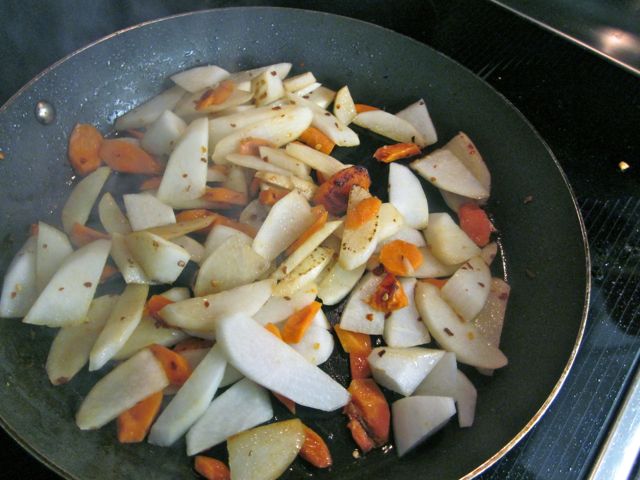
3 oil-packed anchovy fillets, drained

3 garlic cloves, finely chopped

1 head of escarole (12 ounces), rinsed and halved lengthwise

12 radishes, halved if large

Freshly grated Parmigiano-Reggiano cheese and lemon wedges, for serving

Preparation:

Preheat the oven to 450°. Place a baking sheet in the oven to heat. In a large cast-iron skillet, heat 2 tablespoons of the olive oil. Season the pork chops with salt and pepper and cook over moderately high heat until golden on both sides, about 3 minutes. Transfer the chops to the hot baking sheet and roast for about 6 minutes, until just cooked through.

Meanwhile, in the same skillet, melt the butter in the remaining 1 tablespoon of olive oil. Add the anchovies and garlic and cook over moderate heat, stirring, for 30 seconds. Add the escarole, radishes and 2 tablespoons of water; season with pepper. Cook over moderate heat, turning occasionally, until the escarole is charred in spots and just wilted, about 3 minutes. Transfer the pork, escarole and radishes to plates and serve with grated cheese and lemon wedges. Serves 2.

From the December 2013 issue of Food and Wine

If you are looking for a light, tasty, fast weeknight dinner, try this seared tuna with warm tomato, bean and olive salad from the Holiday 2013 issue of the LCBO’s Food & Drink. Inspired by one of our summer favourites, salade Nicoise, seared tuna is paired with a salad of cherry tomatoes, olives, capers and blanched green beans tossed in a tangy vinaigrette.

Avoiding Additives and Preservatives

Red wine vinegar, Dijon mustard, olives and capers can contain artificial ingredients. I use Eden Organic brand vinegar, which has no sulfites added, and PC Old-Fashioned Dijon, which is all-natural. Check the label on the olives; I used Pilaros brand from Costco. Unico capers are preservative-free.

Make the tarragon-flavoured vinaigrette

Blanch the green beans

Combine beans, tomatoes, olives and capers

Use tuna steaks that are 1 to 1.5 inches thick

Sear the tuna for 1 to 2 minutes per side

Seared tuna with warm tomato, bean & olive salad

Ingredients:

Vinaigrette

1 small garlic clove, minced

2 tsp (10 ml) red wine vinegar

1 tsp (5 ml) Dijon mustard

1/3 cup (80 ml) olive oil

2 tsp (10 ml) chopped fresh tarragon

Salt and freshly ground pepper

3 cups (750 ml) fresh green beans, trimmed, about 10 oz (300 g)

Tuna

3 tbsp (45 ml) olive oil

2 cups (500 ml) cherry tomatoes, about 9 oz (280 g)

½ cup (125 ml) pitted, dry-cured Moroccan-style black olives

1 tbsp (15 ml) capers

Salt and freshly ground pepper

2 tuna steaks, each 10 oz (300 g), approximately 1 to 1.5 inches (2.5 to 4 cm) thick

Preparation:

Bring a medium pot of salted water to a boil.

Combine garlic vinegar and Dijon in a medium bowl. Gradually whisk in 1/3 cup (80 ml) olive oil until combined. Stir in tarragon and season with salt and pepper. Reserve.

Cook beans in boiling water for 3 minutes, or until tender-crisp. Drain and transfer to a large bowl.

Heat 1 tbsp (15 ml) oil in a medium skillet over high heat. Add tomatoes and cook, shaking the pan often, until tomatoes are wilted and skins have golden edges, about 4 minutes. Add olives and capers and cook until flavours have combined, 1 to 2 more minutes. Season with salt and pepper. Transfer to bowl with beans.

Wipe same pan clean and return to high heat. Add remaining 2 tbsp (30 ml) oil. Season tuna steaks with salt and pepper. Sear tuna for 1 to 2 minutes per side, or until golden and crisp on the outside and rare in the centre. Remove to a cutting board. Slice tuna into ½ -inch (1 cm) slices, cutting across the grain.

Pour vinaigrette over warm vegetables and toss to combine. Divide vegetable salad onto 4 plates. Top with seared tuna. Serves 4.

From the Holiday 2013 Food & Drink magazine

Tasty, healthy and fast—this stir-fry from the December 2013 issue of Canadian Living is a perfect weeknight supper during the busy holiday season. Cook chicken strips with ginger and garlic, stir in a yellow pepper and the Swiss chard, wait until the chard wilts, and then stir in cooked soba noodles, snow peas and a soy/lime/sesame sauce. You could also serve this with rice or regular spaghetti noodles.

Avoiding Additives and Preservatives

Use tamari instead of soy sauce, because it does not contain preservatives. Always use freshly squeezed lime juice; the concentrates are bitter and contain sodium benzoate.

Cut the chicken into strips

Slice yellow pepper and Swiss chard

Stir fry chicken with garlic and ginger

Add chard and pepper

The chard will wilt in a minute or two

Serve the stir fry over soba noodles

Ingredients:

4 tsp (18 ml) sodium-reduced soy sauce

1 tbsp (15 ml) lime juice

2 tsp (10 ml) sesame oil

2 tsp (10 ml) vegetable oil

225 g boneless skinless chicken breast, thinly sliced

1 tbsp (15 ml) grated fresh ginger

3 cloves garlic, minced

8 cups (2 L) chopped stemmed Swiss chard, (about 1 bunch)

1 sweet yellow pepper, sliced

170 g soba noodles

4 cups (1 L) snow peas

2 tsp (10 ml) sesame seeds, toasted

Preparation:

In small bowl, whisk together soy sauce, lime juice and sesame oil; set aside. In large nonstick skillet or wok, heat vegetable oil over medium-high heat; cook chicken, ginger and garlic, stirring often, until chicken is light golden, about 3 minutes.

Stir in Swiss chard and yellow pepper; stir-fry until chard starts to wilt, about 2 minutes.

Meanwhile, in large pot of boiling water, cook soba noodles according to package directions; drain. Add noodles to skillet along with snow peas and soy sauce mixture; stir-fry for 1 minute. Transfer to platter. Sprinkle with sesame seeds.

From the December 2013 issue of Canadian Living

« Previous PageNext Page »