Entries tagged with “Alison Roman”.
Did you find what you wanted?
Sun 29 Mar 2026
Posted by Recipe Sleuth under New Finds
No Comments
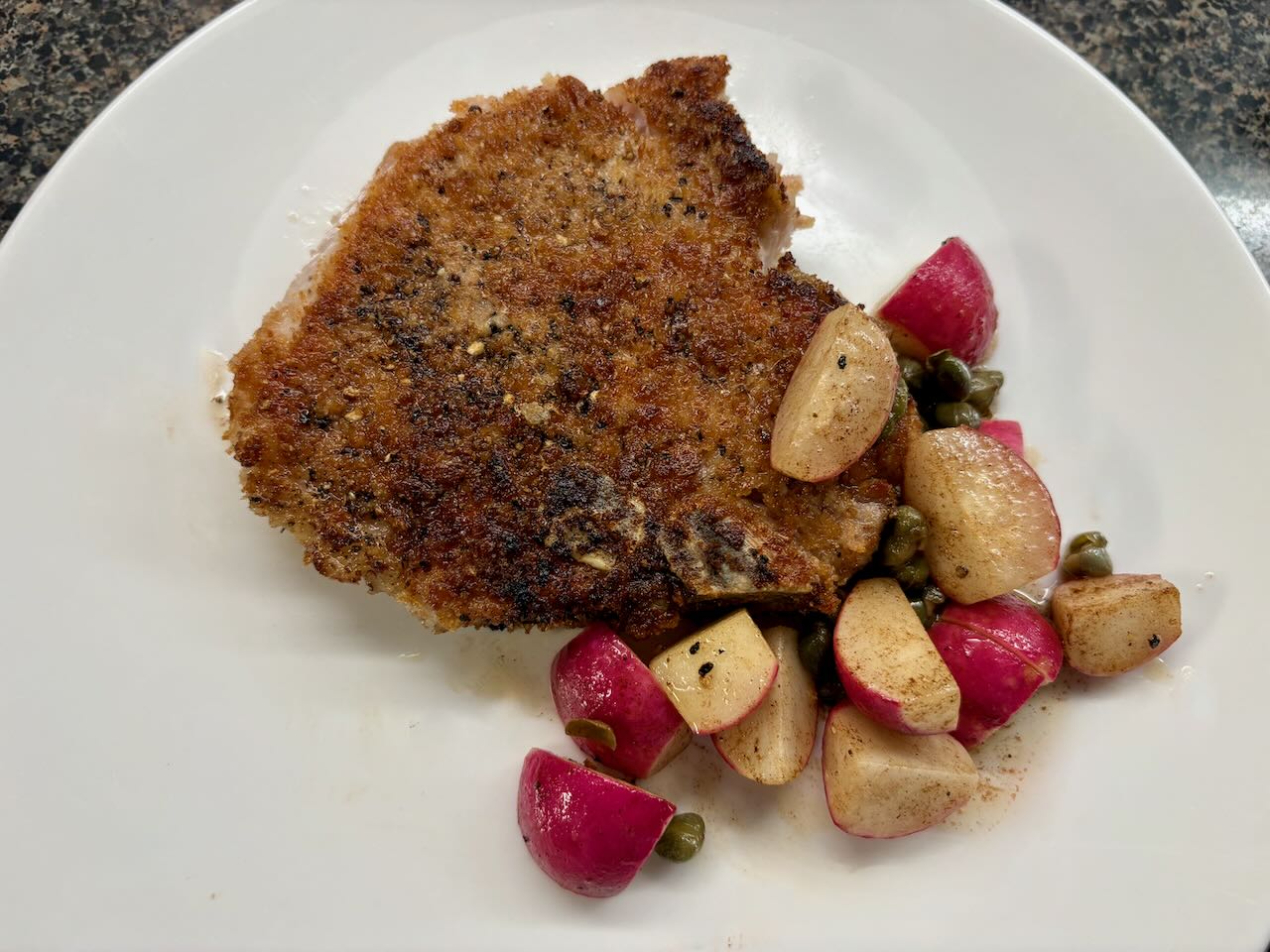
This recipe from Alison Roman’s Something From Nothing, is quick and tasty. Season pork and coat with seasoned breadcrumbs. Cook the pork for a few minutes on each side, until golden brown, and set aside. Wipe out the skillet, add butter and then add capers and half the radishes. Serve the pork with the butter-tossed radishes and raw radishes. Cook’s note: I did not use the radish greens and omitted the lemon.
Avoiding Additives and Preservatives
Most brands of panko are additive-free. I used Unico capers, which do not contain preservatives. Use butter that contains only cream, with no colour added.
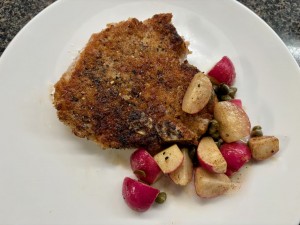
Crispy pork with buttered radishes
Ingredients:
2 bone-in or boneless pork chops (rib or loin), cut ½ -inch (1.25-cm) thick (about 6 ounces/170 g each)
Kosher salt and black pepper
1 ½ cups (375 ml) panko or fresh coarse breadcrumbs
3 tablespoons (45 ml) canola oil, plus more as needed
4 tablespoons (60 ml) unsalted butter
2 tablespoons (30 ml) capers
1 bunch radishes, with tops on if you like, cut into quarters
Flaky sea salt
1 lemon, cut into wedges
Preparation:
Season pork with salt and pepper. Place panko in a rimmed baking sheet or baking dish and season it with salt and pepper. Working one at a time, firmly press both sides of each pork chop into the seasoned panko until the chops are evenly and well coated.
Heat oil in a large skillet (10 to 12 inches/25 to 30 cm) over medium-high heat; it should evenly coat the bottom of the skillet. If it doesn’t, add a bit more oil. Place the pork chops in the skillet and cook until deeply golden brown, like the colour of a well-baked croissant, 3 to 4 minutes.
Using tongs or a spatula, flip pork and continue to cook until well browned on the other side, too, another 2 to 3 minutes. Transfer pork to a plate, platter or cutting board lined with paper towel and season with salt.
Wipe out skillet and return to the stove over medium-high heat. Add butter, letting it sizzle, brown and foam. Add capers and half of the radishes, seasoning them with salt and pepper. Toss a few times, just to wilt the radish greens, if they’re still on, and to evenly coat the radishes with the brown butter and capers.
Divide pork chops among plates and nestle butter-tossed radishes and capers alongside, plus remaining raw radishes. Sprinkle with a bit of flaky salt and serve with lemon wedges alongside for squeezing over. Serves 2.
From Something From Nothing
Sun 1 Feb 2026
Posted by Recipe Sleuth under New Finds
No Comments
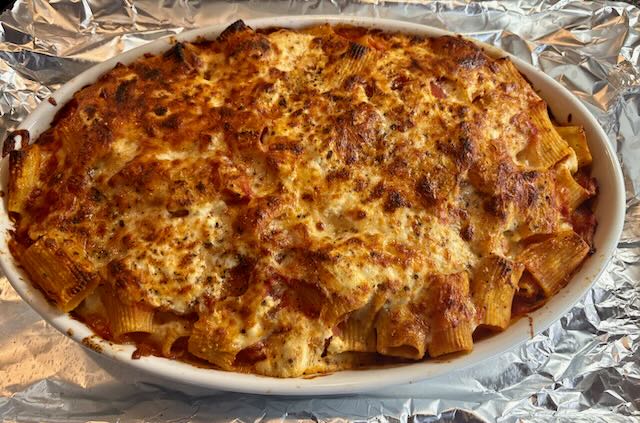
This is another recipe from Alison Roman’s Something from Nothing that is perfect for a cold winter night. Make the sauce by cooking onions, garlic, seasoning and canned tomatoes. For the cheese mixture, combine ricotta, cream and garlic. Cook the pasta. Assemble by layering the sauce, pasta and cheese mixture. Bake for about 40 minutes. Cook’s notes: Don’t be shy about using enough sauce, otherwise the pasta will be dry. If you want the finished product to be more browned on the top, place the pasta under the broiler for a minute or two. This would also be very good with a meat sauce. Add a pound of ground meat or poultry when the onions are cooking and then continue with the sauce recipe, cooking for an extra 30 minutes.
Avoiding Additives and Preservatives
Unico tomatoes, Tre Stelle ricotta and Simple brand mozzarella are all free of colour, additives and preservatives. Genuine Parmesan is also free of colour, additives and preservatives; look for the name stamped on the rind.
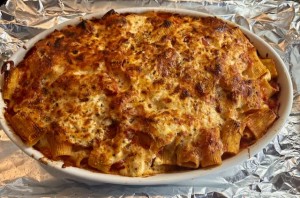
Baked shells
Ingredients:
¼ cup (60 ml) olive oil
Kosher salt, fresh ground black pepper
2 large or 4 small onions, diced
8–10 cloves garlic, thinly sliced, plus 1 clove garlic, grated
½–1 (2.5-5 ml) teaspoon crushed red pepper flakes, optional
1 (28-ounce/796 ml) can whole peeled tomatoes, packed in juice
1 (28-ounce/796 ml) can crushed tomatoes
1 cup (250 ml) ricotta
3 tablespoons (45 ml) heavy cream
1 pound (454 g) large pasta shells
½ pound (227 g) salted mozzarella, roughly torn by hand or grated on a box grater
Parmesan, for grating
Preparation:
Make the tomato sauce: Heat oil in a large, heavy-bottomed pot over medium-high heat. Add onion and garlic and season with salt and pepper. Cook, stirring occasionally, until the onion is totally softened and translucent (without letting it brown, turning down the heat if needed), 8 to 10 minutes. Crush the whole tomatoes by hand and add them (including the juice) and the crushed tomatoes to the pot, stirring to scrape up any bits from the bottom of the pot. Fill the empty can about halfway with water, swirling to get any excess crushed tomatoes hanging around, and add it to the sauce. Season with salt and pepper and add red pepper flakes, if using. Bring to a simmer, then reduce to medium-low (or low, depending on your stove) and cook, stirring occasionally, letting it bubble gently, until the tomato sauce has thickened and flavours have come together, at least 30 minutes, and up to an hour and a half.
Make the cheese mixture: In a medium bowl, combine ricotta, heavy cream, and 1 clove grated garlic. Season with salt and pepper and set aside.
Prepare the pasta: Heat oven to 425°F (218°C) and place a large pot of salted water to boil on the stove. Cook pasta until it’s nearly al dente and drain. Return pasta to pot and add two cups sauce, tossing to make sure the sauce gets in all the nooks and crannies and is nicely coated.
When assembling, try not to fuss too much over the measurements, but be mindful that you always want to end with a good amount of cheese and sauce on the top to give you a bubbly, browned top.
Spoon a bit of the remaining sauce in the bottom of a 3-quart (3-L) baking dish, then add ⅓ of the pasta. Spoon a little sauce on top, then dollop with ricotta and dot with mozzarella. Grate parmesan on top. Add another ⅓ of the pasta, followed by more sauce, more ricotta, mozzarella and parmesan. Add the rest of the pasta, more sauce, the rest of the ricotta, mozzarella, another good grating of parm and some pepper (there’s a good chance you’ll have some pasta sauce left over– refrigerate or freeze for another time).
Place the baking dish on a foil-lined sheet pan and loosely cover the baking dish with foil. Place in the oven and bake for about 20 minutes before removing the foil and continuing to bake until it’s nicely browned and bubbling, another 20-ish minutes. Let cool at least 5 minutes or so before eating– it will stay very hot for a while, so don’t worry. Serves 6-8. The sauce can be made 5 days ahead, refrigerated and can be frozen for up to two months. The baked pasta can be assembled and baked several days ahead, kept wrapped and refrigerated. To reheat from cold, simply bake per the instructions above. It can also be assembled and frozen up to two months ahead– to reheat from frozen, keep wrapped in foil and bake at 325°F (162°C) until totally defrosted and bubbly (60-ish minutes), remove foil, increase temperature to 425°F (218°C) and bake until golden brown, 20 minutes or so.
From Something from Nothing
Sun 25 Jan 2026
Posted by Recipe Sleuth under New Finds
No Comments
This is another great recipe from Alison Roman’s new cookbook, Something From Nothing. Season ground pork, brown it and add garlic, fennel seeds and chile flakes. Add stock and simmer for a few minutes before adding cooked pasta. Add the broccoli rabe or kale and simmer until it has wilted. Serve topped with cheese. Cook’s note: In place of the pork, you can use fresh sausage (hot Italian, turkey, chicken), casing removed, leaving out the fennel seed and chile flakes. I used fusilli pasta and omitted the lemon juice.
Avoiding Additives sand Preservatives
Make sure the dried spices don’t contain colour or anti-caking agents. I used Better Than Bouillon for the stock. Genuine Parmesan does not contain colour or preservatives. Look for the name stamped on the rind.

Spicy pork soup with pasta and Parmesan
Ingredients:
1 tbsp (15 ml) olive oil, plus more for drizzling
1 lb (450 g) minced (ground) pork
kosher salt and freshly ground black pepper
4 garlic cloves, thinly sliced
1 tbsp (15 ml) fennel seeds
½ tsp (2.5 ml) chile flakes, plus more to taste
6 cups (1.4 L) chicken or vegetable stock
6-8 oz (175–225 g) dried pasta
1 bunch broccoli rabe or kale, thick stems removed, chopped
Parmesan cheese, for grating or shaving (lots of it)
1 lemon, halved for squeezing (optional)
Preparation:
Heat the olive oil in a large pot over a medium-high heat. Add the pork and season with salt and pepper. Cook, resisting the urge to break it up too much at first. As it browns, break it up into small pieces; some of the pork will get very small (these bits will get very brown and crispy), and some will stay larger, in sausage-like clumps (these will be tender and juicier). Once the pork is about 80 per cent browned to your liking, 8–10 minutes, add the garlic. Continue cooking until the pork is well browned throughout and the garlic is softened and starting to brown around the edges, another 4–5 minutes.
Add the fennel seeds and chilli flakes. Give them a stir to toast in the pork fat, cooking for a minute or two. Add the stock, season with salt and pepper and bring to a simmer.
Meanwhile, cook the pasta in a medium pot of salted water until just before al dente. (It’ll continue to cook in the soup, but it’s good to give it a head start. Cooking raw pasta in a brothy soup makes the broth too starchy and cloudy.)
Once the soup has simmered for a few minutes, add the broccoli rabe or kale and the pasta, stirring to wilt the greens. Simmer until the rabe is tender and the flavours have mingled appropriately, another 5–8 minutes or so. Season with salt, pepper and more chilli flakes if you like.
To serve, ladle into bowls and top with a drizzle of olive oil and tons of cheese. Sometimes I squeeze lemon over, but not always (doesn’t need it, but it can be nice). Serves 4.
From Something from Nothing
Sun 11 Jan 2026
Posted by Recipe Sleuth under New Finds
No Comments
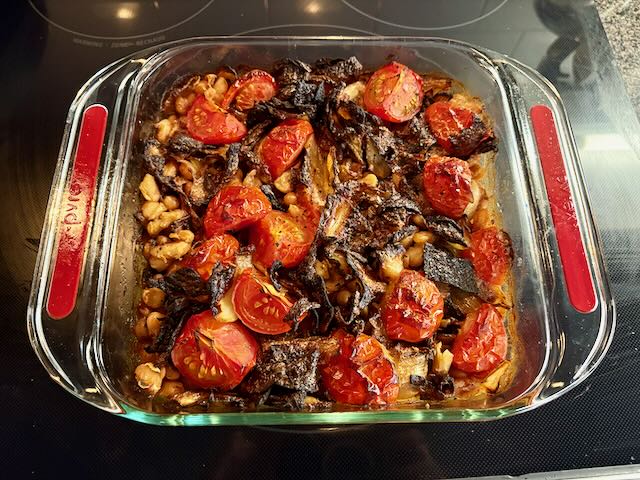
This recipe from Alison Roman’s new cookbook, Something from Nothing, creates a delicious recipe from humble ingredients. Brown cabbage, add shallots and season with salt and pepper. Place the beans in a baking dish and add the cabbage-shallot mixture. Add tomatoes, vinegar and water and bake for about an hour. Top with cheese before serving, if desired.
Avoiding Additives and Preservatives
Use butter without colour. I used Unico white beans and Eden Organic brand red wine vinegar. If you are using cheese, check to make sure it does not contain colour or preservatives.
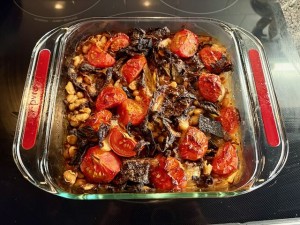
Caramelized beans with tomato and cabbage
Ingredients:
4 tablespoons (60 ml) unsalted butter
4 tablespoons (60 ml) olive oil
½ small head (about 1½ pounds/680 g) cabbage, cut into 1-inch (2.54-cm) wedges
Kosher salt
Freshly ground black pepper
1 large shallot, thinly sliced
2 (15-ounce/443 ml) cans large white beans, such as butter beans, gigante, or cannellini, drained and rinsed
8 ounces (227 g) tomatoes, preferably small, halved if small, quartered or chopped if large
1 tablespoon (15 ml) white wine vinegar, sherry vinegar, or white distilled vinegar
A hunk of Parmesan cheese for grating on top, ricotta for spooning over, or feta for crumbling (optional)
Preparation:
Preheat the oven to 425°F (219°C).
Heat the butter and olive oil in a large skillet (preferably oven-safe) over medium heat. Add the cabbage, cut-side down, and season with salt and pepper. Cook, without disturbing or peeking, until the cabbage is deeply golden brown on one side, 8–10 minutes. Using tongs or a fish spatula, carefully flip and repeat on the other side, another 8–10 minutes.
Once the cabbage is well browned on both sides, add the shallots and season with salt and pepper. Cook, stirring or shaking the skillet occasionally to make sure the shallots can make contact with the pan, until they are nicely browned and totally tender, 5–7 minutes.
Meanwhile, place the beans in a 1½- to 2-quart (1½- to 2-L) baking dish. Once the cabbage and shallots are nicely browned and tender, add them to the baking dish, along with the tomatoes, vinegar, and 1 cup (250 ml) water. Season well with salt and pepper and rearrange the goods, adjusting some of the wedges of cabbage and pieces of tomato so that they make their way to the top. (They will get so delicious in the oven.)
Place in the oven and bake until the liquid has reduced by quite a bit, everything is bubbling up the sides of the dish in a sticky, caramelized way, and the top is delightfully browned, bordering on crisp, 50-60 minutes.
Remove from the oven and let cool slightly. Serve with or without cheese. Serves 4. The beans can be made 2 days ahead, wrapped, and refrigerated. Reheat in a 425°F (219°C) oven, uncovered, until warmed through and bubbling once more, 20–30 minutes. Leftovers can also be scooped into a skillet and rewarmed on the stovetop.
From Something from Nothing by Alison Roman
Sun 14 Mar 2021
Posted by Recipe Sleuth under New Finds
No Comments
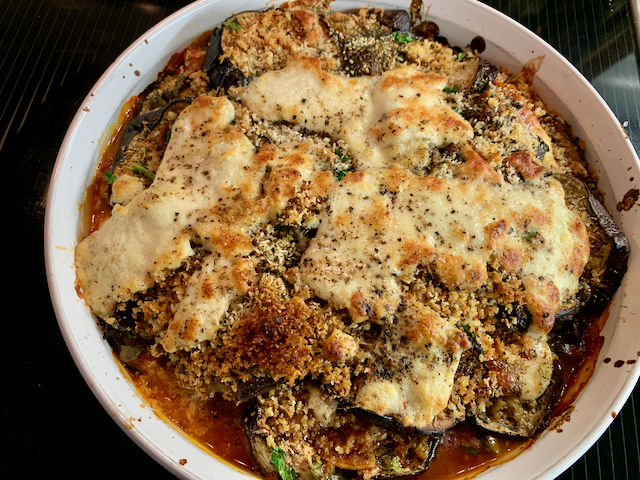
This mini eggplant Parmesan from Alison Roman (it serves two as a main dish or four as a side dish) delivers delicious results without any frying. Roast the eggplant until it is deep brown and tender. Make a tomato sauce, toast the breadcrumbs and then layer the eggplant and sauce with the breadcrumbs, Parmesan, capers, oregano and parsley. Top with fresh mozzarella and bake for about 20 minutes. This is a perfect vegetarian main dish, served with a green salad.
Avoiding Additives and Preservatives
Unico anchovies, capers and canned tomatoes are additive-free. Genuine Parmesan cheese contains no colour, additives or preservatives; look for the name on the rind. I used PC panko, which is additive-free. Make sure the hot pepper flakes and dried oregano (if using) are free of additives. Good-quality fresh mozzarella contains no additives or preservatives.

On top of the sauce, layer the roasted eggplant, Parmesan, parsley, capers, oregano, breadcrumbs and mozzarella

Bake for about 20 minutes
Ingredients:
1 large globe eggplant (about 2 pounds/900 g), sliced about ½-¾-inch (1.25-1.9-cm) thick
½ cup (125 ml) olive oil, divided
Kosher salt, freshly ground black pepper
1 small onion (yellow, white, or red), thinly sliced
4 garlic cloves, thinly sliced
Crushed red pepper flakes (optional)
4 anchovy fillets (optional), plus more if you want
1 28 oz. (793 g) can whole San Marzano tomatoes, crushed
¾ cup (187.5 ml) panko bread crumbs
⅓ cup (85 ml) grated parmesan
2–3 tablespoons (30-45 ml) capers, coarsely chopped
2 tablespoons (30 ml) chopped fresh oregano or marjoram (you can skip, or use half the amount of dried)
⅓ cup (85 ml) coarsely chopped parsley, divided
8 oz. (226 g) fresh mozzarella, thinly sliced or torn
Preparation:
Preheat oven to 450° F (232° C). Drizzle eggplant with about half the olive oil and season with salt and pepper and roast, turning eggplant halfway through, until it’s as tender as custard and both sides are as brown as if they were fried, 25–30 minutes.
While the eggplant roasts, make the sauce. Heat two tablespoons (30 ml) of olive oil in a medium pot over medium-high heat. Add onion and garlic, season with salt and pepper. Cook, stirring every now and then until the onions and garlic are tender and starting to brown around the edges, 8–10 minutes. Add crushed red pepper flakes and anchovies, if using, and stir, letting both things melt into the onions. Pour the juices from the tomatoes into the pot and one by one, crush the tomatoes with your hands into the pot. Season again with salt and pepper and let it simmer gently for 15–30 minutes (you want to evaporate some but not all of the liquid).
Remove from heat. Set half aside and freeze or refrigerate the rest.
Heat the remaining 2 tablespoons (30 ml) olive oil in a small to medium skillet over medium heat. Add the bread crumbs and season with salt and pepper. Stir them to coat evenly in the oil and toast, tossing frequently, until all the bread crumbs are the color of toast, 5–7 minutes. Remove from heat.
Spoon about half of the tomato sauce on the bottom of a 1 qt. (1 L) baking dish or 6-inch (15-cm) skillet (both hold about 4 cups/1 L volume, that’s the size you want. Doesn’t matter the shape, as long as its heatproof).
Top with half the eggplant. Top with half the parmesan, parsley, capers, and oregano. Scatter half the bread crumbs in an even layer on top of all that, followed by half the mozzarella. Repeat this, ending with the mozzarella. Add a little more parmesan if you feel like it, maybe some black pepper.
Bake until the cheese is browned and everything is bubbling around the edges, 15–20 minutes. Remove from the oven, maybe finish with some more parsley and let it cool ever so slightly before eating. Serves 2 as a main dish and 4 as a side dish.
From Alison Roman
Sun 17 Jan 2021
Posted by Recipe Sleuth under New Finds
No Comments
This pasta dish from Alison Roman is absolutely delicious. Caramelize shallots and garlic, add hot pepper flakes, anchovies, tomato paste and cook for another few minutes. Set half of the sauce aside in the fridge or freezer for future use. Cook the pasta and add to the remaining sauce with some of the pasta cooking water. Cook until the sauce is thickened a bit and coats the pasta. Garnish with a mixture of chopped parsley, garlic, salt and pepper. Cook’s note: I know this looks like a lot of anchovies, but they add an incredible depth of flavour and the final dish does not taste like anchovies at all.
Avoiding Additives and Preservatives
Check the hot pepper flakes to make sure they don’t contain colour or anti-caking agents. I used Unico anchovies and No Name tomato paste.

Caramelized shallot pasta
Ingredients:
¼ cup (60 ml) olive oil
6 large shallots, very thinly sliced
5 garlic cloves, 4 thinly sliced, 1 finely chopped
Kosher salt and freshly ground black pepper
1 teaspoon(5 ml) red-pepper flakes, plus more to taste
1 2-ounce (57 g) can anchovy fillets (about 12), drained
1 4.5-ounce (128-g) tube or 6-ounce (170-g) can of tomato paste, about ½ to ¾ cup (125 to 187 ml)
10 ounces (285 g) pasta
1 cup (250 ml) parsley, leaves and tender stems, finely chopped
Flaky sea salt
Preparation:
Heat olive oil in a large heavy-bottomed Dutch oven over medium high. Add shallots and thinly sliced garlic, and season with salt and pepper. Cook, stirring occasionally, until the shallots have become totally softened and caramelized with golden-brown fried edges, 15 to 20 minutes.
Add red-pepper flakes and anchovies. (No need to chop the anchovies; they will dissolve on their own.) Stir to melt the anchovies into the shallots, about 2 minutes.
Add tomato paste and season with salt and pepper. Cook, stirring constantly to prevent any scorching, until the tomato paste has started to cook in the oil a bit, caramelizing at the edges and going from bright red to a deeper brick red color, about 2 minutes. Remove from heat and transfer about half the mixture to a resealable container, leaving the rest behind. (These are your leftovers to be used elsewhere: in another batch of pasta or smeared onto roasted vegetables, spooned over fried eggs or spread underneath crispy chicken thighs.)
To serve, cook pasta according to package instructions in a large pot of salted boiling water until very al dente (perhaps more al dente than usual). Transfer to Dutch oven with remaining shallot mixture (or a skillet if you are using the leftover portion) and 1 cup pasta water. Cook over medium-high heat, swirling the skillet to coat each piece of pasta, using a wooden spoon or spatula to scrape up any bits on the bottom, until pasta is thick and sauce has reduced and is sticky, but not saucy, 3 to 5 minutes.
In a small bowl, combine parsley and finely chopped garlic clove, and season with flaky salt and pepper. Divide pasta among bowls, or transfer to one large serving bowl, and top with parsley mixture and a bit more red-pepper flakes, if you like. Serves 4.
From Alison Roman
Sun 15 Mar 2020
Posted by Recipe Sleuth under New Finds
No Comments
I don’t know about you, but recent events have me yearning for comfort food and this baked pasta dish from Alison Roman in a recent issue of Bon Appetit fits the bill. While the pasta cooks, cook leeks and then add red pepper flakes and chopped broccoli rabe. Combine the cooked pasta with the leek-broccoli rabe mixture, then add cream, cheese, chives and some of the pasta cooking water. Put the mixture into a baking dish, top with breadcrumbs and cheese and bake for about 35 minutes. Delicious!
Avoiding Additives and Preservatives
Make sure the cheddar does not contain colour and the red pepper flakes do not contain colour. I used 4C brand of panko for the topping.

Cook the leeks until soft and beginning to brown
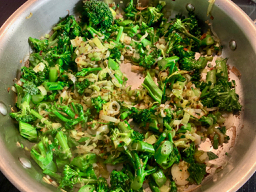
Add the broccoli rabe and cook until it begins to wilt

Mix leeks and broccoli rabe with chives, cream and cheese. Place in baking dish and top with breadcrumbs and more cheese.

Bake until browned and bubbling

Sprinkle with chives and serve
Ingredients:
Kosher salt
1 lb. (454 g) rigatoni, ziti, or fusilli
8 Tbsp. (120 ml) extra-virgin olive oil, divided
3 large leeks, white and pale green parts only, halved lengthwise, thinly sliced into half-moons
Freshly ground black pepper
1 tsp. (5 ml) – or more – crushed red pepper flakes
2 bunches broccoli rabe or 3 bunches baby broccolini, trimmed, coarsely chopped
1 cup (250 ml) heavy cream
12 oz. (340 g) sharp white cheddar, coarsely grated (about 3 cups/750 ml), divided
1 cup (250 ml) chopped chives, divided
1 cup (250 ml) coarse fresh breadcrumbs or panko (Japanese breadcrumbs)
Preparation:
Preheat oven to 425° F (218° C). Bring a large pot of water to a boil, then add a generous amount of salt. Cook pasta, stirring occasionally to keep it from sticking together, until just barely al dente, about 2 minutes less than package directions. Drain pasta, reserving 1 cup (250 ml) pasta cooking liquid.
While you are cooking the pasta, get the broccoli rabe going. Heat 5 Tbsp. (75 ml) oil in a large Dutch oven or other heavy pot over medium–high. Add leeks and season with salt and black pepper. Cook, stirring occasionally, until leeks are softened (but not so much that they don’t have any texture left) and starting to brown, 8–10 minutes.
Add red pepper flakes to leeks and stir to incorporate. Add broccoli rabe by the handful, stirring to combine and allowing each addition to wilt before adding more. Season with salt and black pepper. Once all of the broccoli rabe has been added, cook, stirring occasionally, until bright green and wilted, about 2 minutes. Remove pot from heat and set aside.
Add pasta to reserved broccoli rabe mixture along with cream, three-quarters of the cheese, ½ cup (125 ml) chives, and reserved pasta cooking liquid; mix well. Season with salt and black pepper and add more red pepper flakes if you prefer more heat (keep in mind that the saltiness and spiciness will increase as the pasta bakes).
Transfer pasta to a 3-qt. (2.8 L) baking dish (or, if your Dutch oven is ovenproof, just leave it in there). Toss breadcrumbs and remaining 3 Tbsp. (45 ml) oil in a medium bowl until coated; season with salt and black pepper. Scatter over pasta, then sprinkle evenly with remaining cheese. Bake until pasta is bubbling across the entire surface and breadcrumbs are deep golden brown, 30–35 minutes. Let cool slightly.
Scatter remaining chives over pasta just before serving. Serves 6-8.
From Bon Appetit
Sun 5 Jan 2020
Posted by Recipe Sleuth under New Finds
No Comments
Happy New Year! This recipe from Alison Roman’s Nothing Fancy can be made in the oven or on the grill. Marinate the chicken in citrus juice, tamari sauce, oil, jalapeno and garlic. Cook the chicken and let it rest on top of citrus slices. Sprinkle with herbs and reserved marinade and serve after the chicken has rested about 15 minutes.
Avoiding Additives and Preservatives
Use freshly squeezed juice and tamari, which does not contain artificial ingredients. Use jalapeno instead of the sambal sauce.

Let the cooked chicken rest on citrus slices, topped with herbs and reserved marinade

Citrus chicken rested in herbs
Ingredients:
½ cup (125 ml) lime or lemon juice, plus 1 lime or lemon, thinly sliced
½ cup (125 ml) orange juice, plus 1 orange, thinly sliced, seeds removed
½ cup (125) ml soy or tamari sauce
2 tablespoons (30 ml) canola oil
2 tablespoons (30 ml) sambal or 1 jalapeño chilli, finely chopped
2 garlic cloves, finely grated
Kosher salt and freshly ground
Black pepper
1 3.5 to 4 lb. (1.6 to 1.8 kg) chicken, halved lengthways through the backbone, or bone-in, skin-on parts
1 handful coarsely chopped coriander, tender leaves and stems
1 handful coarsely chopped parsley, tender leaves and stems
A few sprigs of rosemary, thyme, oregano or marjoram (optional)
Preparation:
To make the marinade, combine the lime juice, orange juice, soy sauce, oil, jalpeno and garlic in a medium bowl and season with salt and pepper. Set about half aside for later, and add the rest of the marinade to a large bowl, resealable bag or baking dish. Add the chicken, tossing to coat well.
Let it sit in the marinade for at least 30 minutes, or up to 24 hours, in the refrigerator.
Preheat the oven to 450°F (230°C). Alternatively, heat a barbecue grill to medium heat, with cooler coals or low flames on one side. (You can grill the chicken over hotter flames, but it can be challenging to manage; for beginners, it’s good to err on the side of the coals being slightly cooler than slightly hotter.)
Remove the chicken from the marinade, discarding the marinade the chicken was sitting in. Place on a baking tray, skin side up. Roast until the skin is deeply browned and lightly charred and the chicken is cooked through, 35–45 minutes; there’s no need to flip or turn the chicken.
Alternatively, place the chicken skin side down on the grill and cover; make sure the vents are open. Let it grill, resisting the urge to turn or check too frequently, until it’s nicely golden brown with those cute little grill marks, 10–12 minutes; just like when you’re searing chicken in a skillet, the skin will release effortlessly once it’s cooked and golden. Attempting to move it beforehand will probably tear the skin and maybe ruin your day! Using your finest and largest tongs, carefully flip the chicken, then cover so that it continues to grill and cook on the other side, another 10–12 minutes. Flip once more, skin side down, and add a few halves of cut citrus if you have them. Continue to grill another 5–8 minutes, to crisp the skin and finish cooking through.
Place the citrus slices on a platter or cutting board and scatter with the herbs. Place the cooked chicken on top, skin side up, and pour the reserved marinade over. Let the chicken rest for 10–20 minutes, allowing its juices to mingle with the citrus and herbs.
Carve the chicken into pieces before serving. Serves 4-6.
From Nothing Fancy by Alison Roman
Sun 15 Dec 2019
Posted by Recipe Sleuth under New Finds
No Comments
I’m really enjoying cooking from Alison Roman’s new cookbook, Nothing Fancy. In this recipe, salmon is topped with browned butter, caramelized lemon and onion slices and capers and then slow-roasted until just cooked through. Cook’s note: the recipe calls for a garnish of dill, sesame seeds and onion. I didn’t make the garnish and the dish was still outstanding.
Avoiding Additives and Preservatives
Make sure your butter doesn’t contain colour. Unico capers are additive-free.

Season salmon with salt and pepper and place in baking dish

Brown the butter and add lemon, onion and capers

Pour the butter mixture over the salmon and bake

Buttered salmon with lemon and red onion
Ingredients:
1 lemon
2 lbs (907 g) salmon fillet
Kosher salt and freshly ground black pepper
6 tbsp (90 ml) unsalted butter
¼ cup (60 ml) olive oil, plus extra for drizzling
½ a small red onion, sliced into very thin rings, divided
2 tbsp (30 ml) brined capers, drained
One cup (250 ml) fresh dill
2 tbsp (30 ml) toasted sesame seeds (optional)
Preparation:
Preheat the oven to 325º F (163º C). Thinly slice half the lemon and remove any seeds; save the other half for juicing.
Place the salmon on a baking tray or in a large baking dish and season with salt and pepper.
Heat the butter in a medium skillet over medium-high heat. Cook, swirling occasionally, until the butter has started to brown, 2-3 minutes. Add the olive oil, sliced lemon and half the onion. Season with salt and pepper and cook, tossing occasionally, until the lemon and onion have started to brown and frizzle, 2-3 minutes (you’re looking for a kind of crisped rather than softened and caramelized). Add the capers.
Pour the brown butter-lemon mixture over the salmon. Place it in the oven and roast until just cooked through but still medium rare inside, 12-15 minutes; the flesh will more translucent, less opaque. Remove from the oven and transfer to a serving dish.
Meanwhile, toss together the dill and sesame seeds, if using, in a medium bowl. Give a squeeze from the halved lemon and season with salt and pepper. Scatter on top of the salmon, along with the raining sliced onion. Serves 4-6.
From Nothing Fancy, by Alison Roman
Sun 10 Nov 2019
Posted by Recipe Sleuth under New Finds
No Comments
Here’s another delicious dish from Alison Roman’s new cookbook Nothing Fancy. Cook a pot of rigatoni or other tube-shaped pasta and drain. Brown spicy sausage or chorizo and set aside. Brown breadcrumbs and set aside, then fry garlic and add tomato paste and broccoli rabe. Cook a few minutes until the broccoli rabe is tender-crisp. Add the cooked pasta, a splash of pasta cooking water and sausage back to the pot and heat through. Garnish with the breadcrumbs and grated cheese.
Avoiding Additives and Preservatives
I use PC Free From hot Italian sausages, which are additive-free, a panko without additives and No Name tomato paste. Genuine Parmesan cheese contains no additives, preservatives or colour.

Brown the sausage and set aside

Brown the breadcrumbs and set aside

Brown the garlic

Add tomato paste and broccoli rabe and cook until tender-crisp

Add cooked sausage and pasta to the pan

Garnish with breadcrumbs and cheese and enjoy
Ingredients:
1 pound (454 g) fresh chorizo or spicy hot Italian sausage (about 4 links), casings removed
6 tablespoons (90 ml) olive oil, divided, plus more as needed
1 ½ cups (375 ml) fresh coarse bread crumbs or panko
Kosher salt and freshly ground black pepper
1 pound (454 g) dried tube-shaped pasta, such as rigatoni or ziti
6 garlic cloves, thinly sliced
¼ cup (60 ml) tomato paste
1 large bunch of broccoli rabe, stems trimmed, coarsely chopped
Hunk of pecorino, Parmesan, or ricotta salata, for grating
Preparation:
Cook the sausage in a large pot over medium-high heat, breaking up the meat with the back of a spoon, until browned, 5 to 8 minutes. Using a slotted spoon, remove the sausage, leaving the fat behind.
Add 3 tablespoons (45 ml) oil and the bread crumbs to the pot; season with salt and pepper. Cook, stirring frequently, until the bread crumbs are golden brown, 2 to 3 minutes. Transfer to a bowl.
Cook the pasta in a large pot of salted boiling water until just al dente. Drain, reserving at least 1 cup (250 ml) of the pasta water.
Meanwhile, heat the remaining 3 tablespoons (45 ml) olive oil in the pot, then add the garlic and cook, stirring occasionally, until it’s toasted and golden brown, 2 to 3 minutes. Add the tomato paste and cook, stirring constantly, until it’s a nice brick-red color and starts to stick a bit to the bottom of the pot, 2 to 3 minutes more.
Reduce the heat to medium-low and add the broccoli rabe, then season with salt and pepper. Cook, stirring occasionally, until it’s all wilted and bright green, 3 to 5 minutes.
Add the pasta and sausage back to the pot along with ½ cup (125 ml) of pasta water. Cook, stirring constantly, until each piece of pasta is coated nicely in the tomato-y, sausage-y sauce.
Serve straight from the pot (or not), with toasted bread crumbs and cheese for sprinkling over. Serves 6.
From Nothing Fancy by Alison Roman